The right IELTS study plan is the one that closes your band gap, not the one that fits a calendar. Start with a diagnostic mock to fix your baseline. Then measure the distance to your target band and pick the schedule that matches it. A small gap needs roughly a month, a moderate gap two […]

The honest answer is that IELTS difficulty is relative, not absolute: the test feels as hard as the gap between your current English and your band target. A 6.0 is within reach for most candidates after a few weeks of practice. Each half-band above 7.0, though, takes disproportionately more work, and the Writing section is […]

Booking a test or starting a visa file turns on one date: an IELTS score is valid for two years from the test date. That two-year window is printed on your Test Report Form. IELTS validity is the test partners’ own recommendation, yet the binding date belongs to the receiver. Most universities and visas honour […]

Your IELTS result comes on a Test Report Form (TRF). It shows a band for each skill and one overall band, on the same 0 to 9 scale every university and visa office reads. This guide covers the TRF, how fast each test type returns a result, and how to check it online with IDP […]

The benefits of IELTS come down to one thing: it opens doors that stay shut without proof of English. One sitting can unlock study work migration plans in more than 140 countries, which is why global recognition tops every list. The seven benefits below run in order — recognition, visas, careers, real-world fluency, flexible formats, […]

Which IELTS you sit is decided by the body that reads your score, not by you. A university wants IELTS Academic, while a UK visa caseworker wants IELTS for UKVI or IELTS Life Skills. That split is why one applicant often sits two different tests. There are four types of IELTS in everyday use: Academic […]

Paper-based IELTS has been discontinued, so the choice today is between two computer-delivered options: IELTS on Computer, where you type your Writing, and IELTS Writing on Paper, where you handwrite it. Listening and Reading are on computer in both, and content, scoring and recognition are identical, so you decide on how you prefer to write. […]

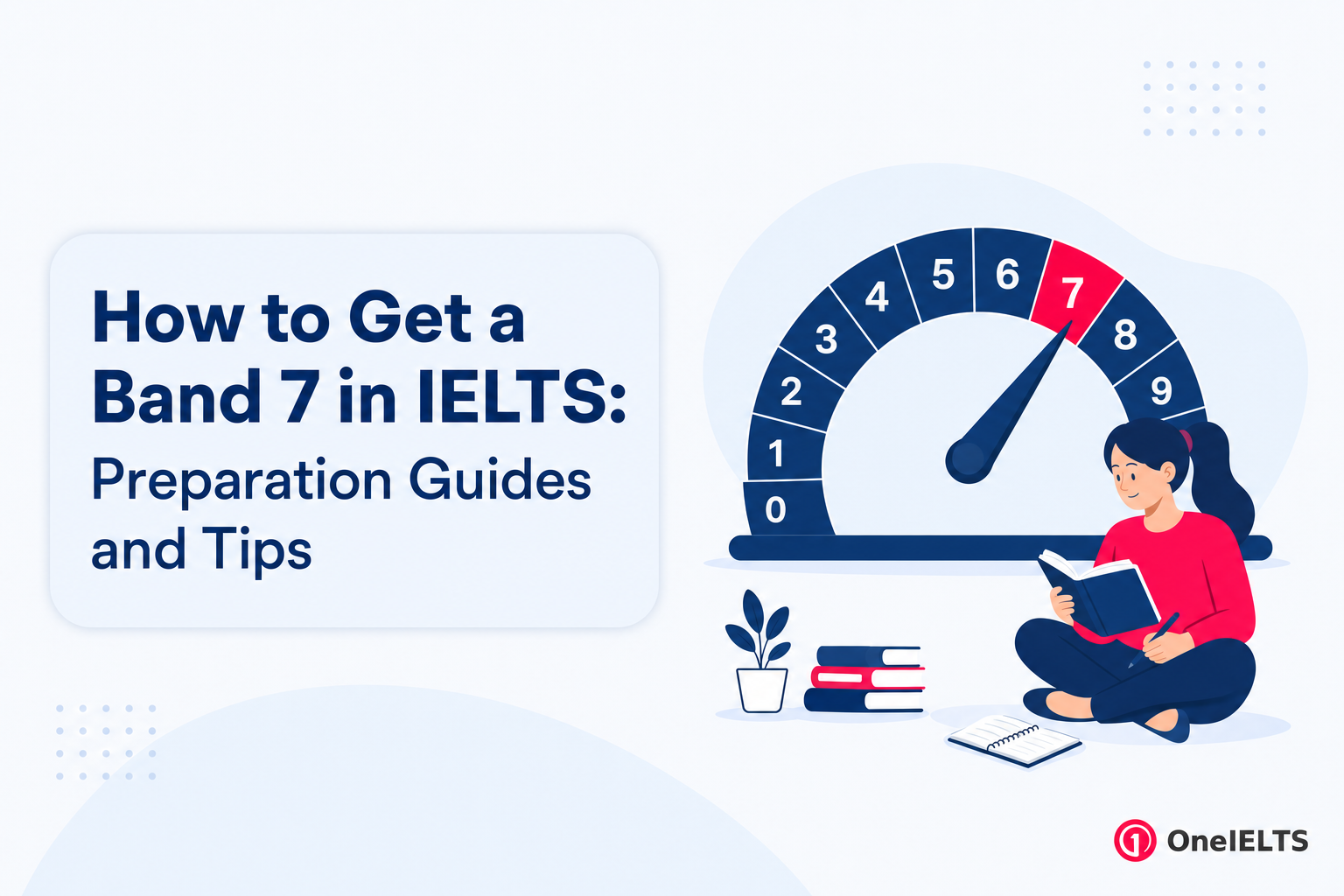
A band 7 in IELTS makes you a Good user: operational command of English, with occasional inaccuracies. ielts.org puts the CEFR C1 threshold between 6.5 and 7. The catch many people miss is that 7 is often a minimum for every section, not just the overall. A 7.5 overall with 6.5 in Writing still fails […]

The IELTS One Skill Retake lets you resit just one of the four IELTS sections after a computer-delivered IELTS, so a single weak band no longer forces you to repeat the whole exam. Eligibility is simple: you took a computer-delivered IELTS and you request the retake within 60 days, and you may resit only one […]

Your IELTS band does more than open a university door. On many merit awards and the British Council’s IELTS Prize, the band itself is scored, so a 7.5 can fund a place a 6.5 only admits. An IELTS scholarship rewards proven English proficiency, and this guide covers whether you can get a scholarship with IELTS, […]

If you book IELTS now, you’ll take it on a computer. The IELTS partners withdrew the paper test from mid-2026, so IELTS on computer is now the standard route. Listening, Reading and Writing happen on screen at a test center, Speaking stays with a live examiner, and results come in about 2 days. Selected countries […]

Sitting the IELTS exam means working through four sections — Listening, Reading, Writing and Speaking — in a single block of about 2 hours 45 minutes, then reporting one set of band scores. That structure is the IELTS exam format: four skills tested separately, each marked on the same 0–9 band scale, with Academic vs […]