Booking a test or starting a visa file turns on one date: an IELTS score is valid for two years from the test date. That two-year window is printed on your Test Report Form. IELTS validity is the test partners’ own recommendation, yet the binding date belongs to the receiver. Most universities and visas honour the full two years, while some skilled-migration streams accept a score up to three years old, so country requirements vary. This guide covers the two-year rule, why it exists, the country and visa variations, how to check your expiry, the three-year myth, and what to do at expiry.
How Long Is an IELTS Score Valid?
An IELTS score is valid for two years from your test date, the day you sat the test rather than the day results arrived. The exact expiry is printed on your Test Report Form (TRF), so you never calculate the validity period yourself. Read that printed date before you submit, because an admissions office or visa officer checks it first.
Why Is the IELTS Validity Period Only Two Years?
The IELTS test partners cap a result at two years because of second-language attrition. English skills fade without regular use, so a band score reflects measured ability for a two-year window at most. After that window, the partners treat the score as an unreliable picture of your current English.
A TRF older than two years is rarely usable. A receiving body that does consider it usually asks for proof you countered the language loss by studying or working in English since the test.
Does IELTS Validity Differ by Country or Visa?
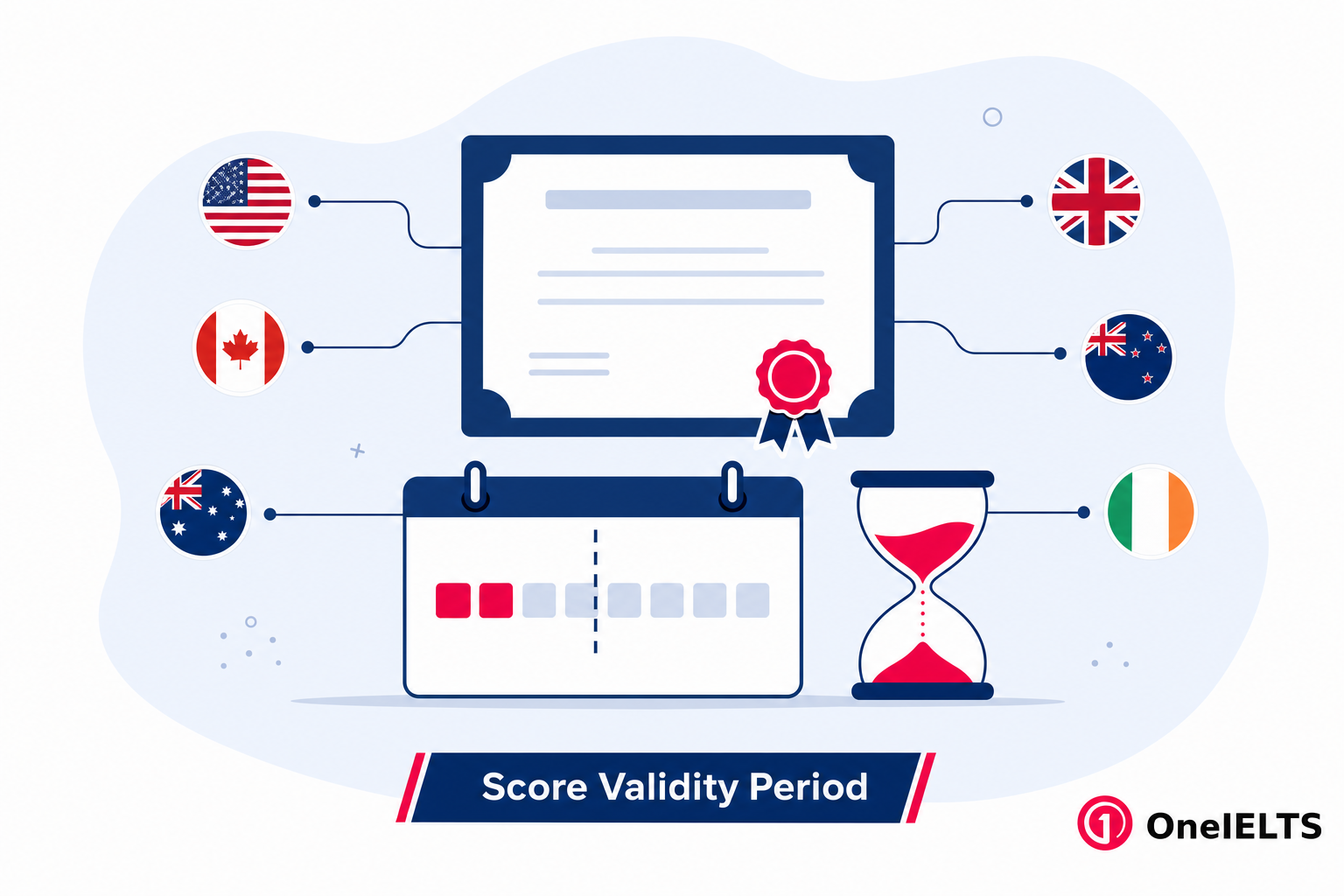
Country-specific requirements decide how recent your score must be, which is why the same TRF can clear one route and fail another. The table below sets out the validity each common purpose accepts, so you can match your score’s age to the rule that binds you.
| Body / Purpose | Validity accepted |
|---|---|
| Most universities | 2 years |
| UK Visas and Immigration (UKVI) | 2 years |
| Australia skilled migration | Up to 3 years |
| Individual universities | May demand a more recent score than 2 years |
Last verified: 30 June 2026
Visa regulations and university policies, not IELTS, set the binding date here. The skilled migration three years allowance proves the point. A score still valid to IELTS can be rejected by a strict university, while a score past two years can clear a migration stream that accepts three.
How Can You Check Your IELTS Validity?
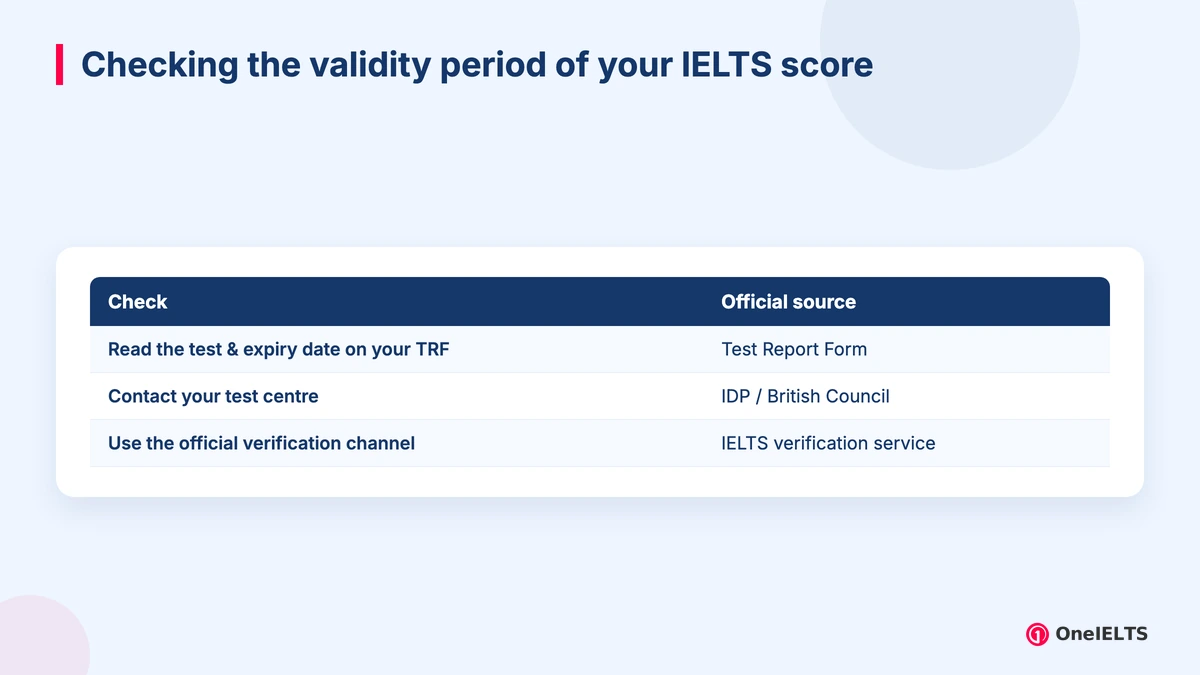
Three reliable checks confirm whether your score is still current before you rely on it. Each validity check points back to an official source rather than a guess.
- Read the test and expiry date on your TRF. Your Test Report Form prints both your test date and validity period, so the TRF expiry date is the first thing to read.
- Contact your IDP or British Council test centre. The test centre that issued your result confirms its status and reissues a TRF if you need one.
- Use the official IELTS verification channel. Receiving organisations run an IELTS verification service that confirms a result directly with the partners.
Can IELTS Validity Be Extended to Three Years?
No, there is no official extension of IELTS validity to three years. The standard remains two years, and you cannot extend a TRF once it is issued.
The three-year myth comes from a separate fact: a few skilled-migration streams accept scores up to three years old. That skilled migration exception is the receiver’s rule, not an extension of IELTS validity. A retake is the only way to hold a current result past two years.
What Happens at IELTS Score Expiry?
An expired score means your TRF has passed its two-year mark. It no longer counts as valid evidence of your English, so most applications reject it and your practical choice is to sit the test again. Your options once a score expires are set out here.
- Retake the full test to obtain a fresh, fully valid TRF for any application.
- Plan your test date around your application deadlines so a new score stays valid through the whole process, leaving room to plan ahead before each deadline.
Can You Use an Expired IELTS Score?
No, most universities and immigration bodies reject an IELTS Test Report Form once it is older than two years, so the expired score no longer counts as valid proof of English and is rejected outright. You must retake the test to obtain a current score, since there is no way to renew a lapsed TRF. Check how a fresh result is reported on your IELTS result page before you reapply.
How Do You Refresh an Expired IELTS Score?
You refresh an expired IELTS score by retaking the test — or a single section via One Skill Retake before the rest expires. The retake produces a new TRF that resets the two-year clock, and application timing matters: book early enough that the refreshed score is still valid on your deadline. If only one band let you down, the One Skill Retake option lets you resit that section instead of the whole test.
Practice for the Real IELTS Exam
Apply what you’ve learned with free, exam-style practice:
- Take a full IELTS mock test
- Practice by section: Listening, Reading, Writing, Speaking
- Structure your essays with IELTS Writing templates