If a band score sits one half-point below what you needed, an IELTS Enquiry on Results lets a senior examiner re-mark your test, with the fee refunded if band rises. An EOR is a re-mark with a conditional refund, not an appeal: you pay upfront, a senior examiner reviews the sections you choose, and your […]

An IELTS 7.5 puts you in the “Very Good User” band, meaning fully operational English with only occasional slips. It clears the cut-off at almost every university and visa stream you are likely to target. That is the real headline: a 7.5 already meets nearly every requirement, so the only open question is whether an […]

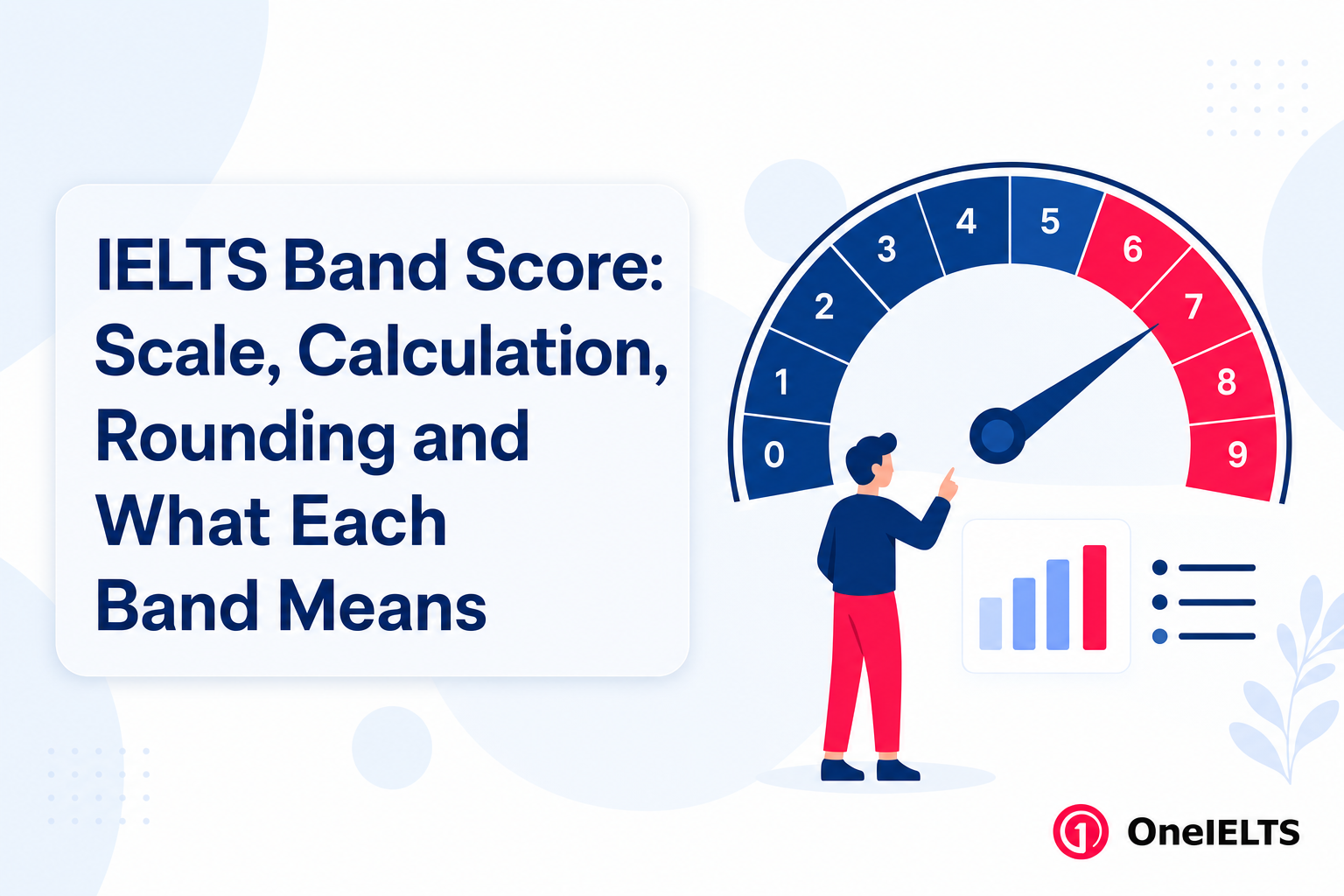
Your IELTS band score is a number between 0 and 9 on a fixed 0 to 9 scale, and it tells a university or visa office how well you use English. You get a band for each of the four sections plus an overall band, the average of those four rounded under a strict rounding […]

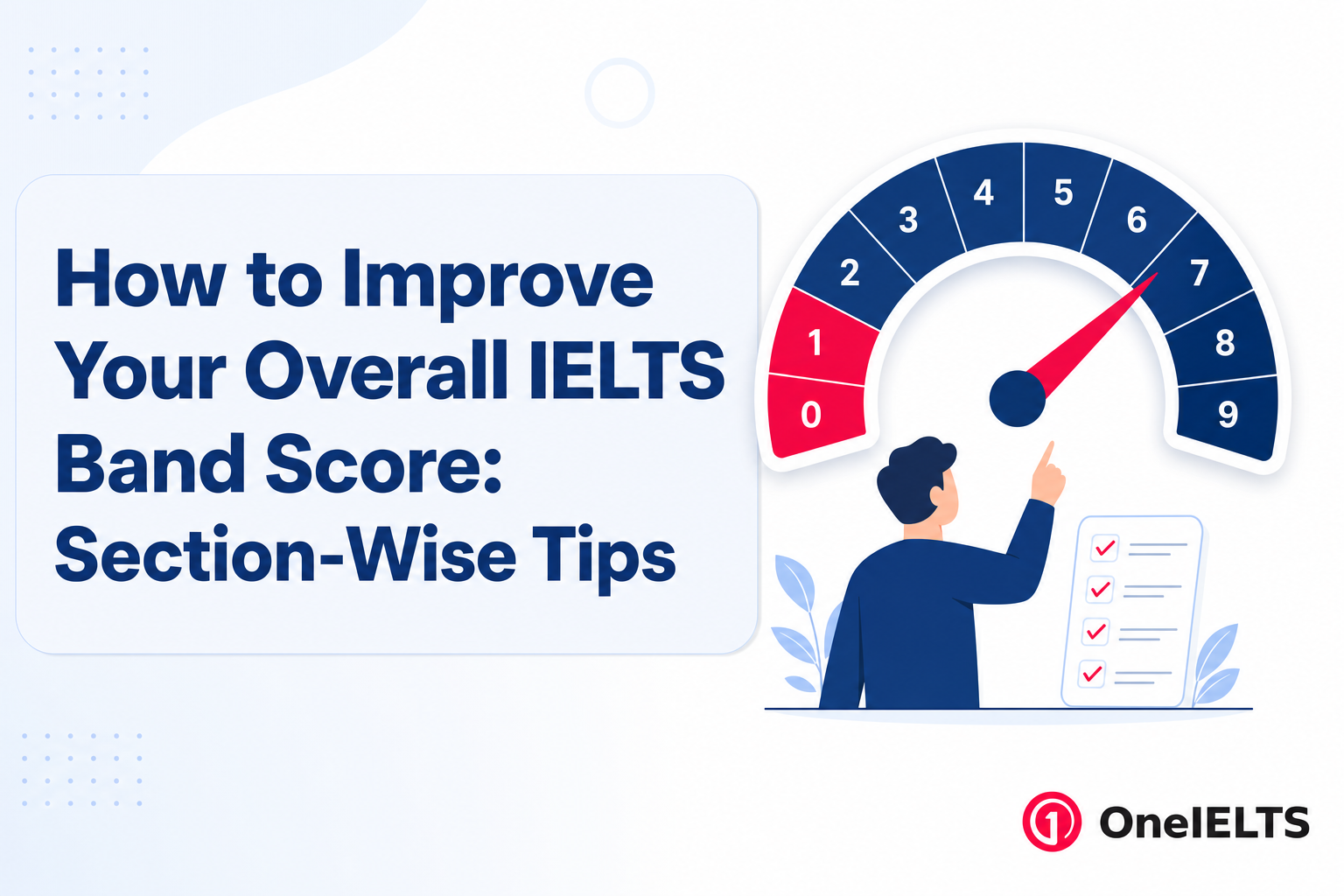
Your overall IELTS band is the average of four sections. The fastest way to raise it is to lift your weakest skill first — moving a 5.5 to 6.5 shifts the overall far more than pushing a 7 to 7.5. This guide gives examiner-approved, section-wise tips for Listening, Reading, Writing, and Speaking, shows how a […]

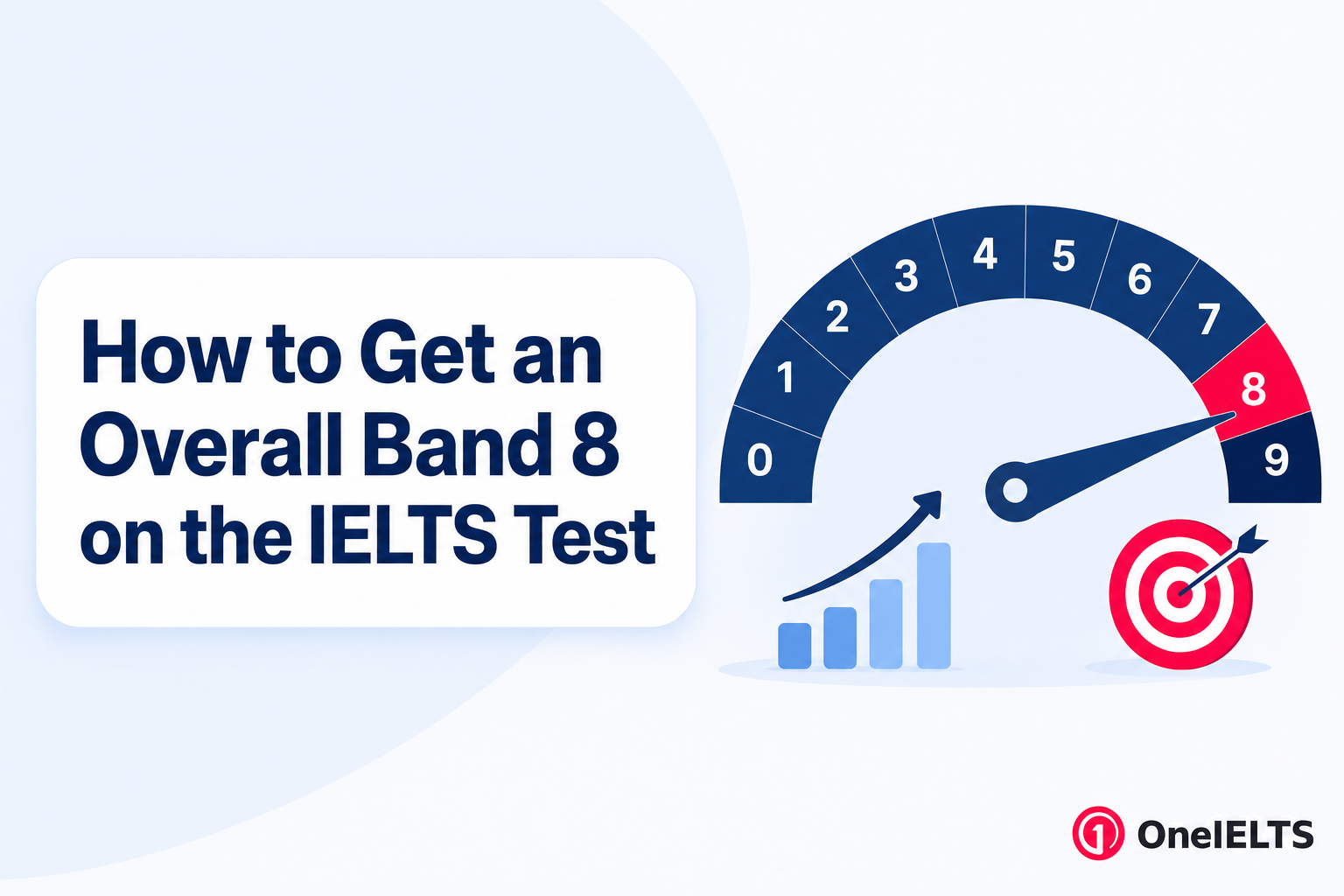
To reach an IELTS band 8 you do not need four flat 8s. The overall is the rounded average of Listening, Reading, Writing and Speaking, so two 8.5s can offset a 7.5. A band 8 marks you as a Very Good User of English. This guide walks through how to score band 8 in each […]

IELTS has no pass or fail, so a good IELTS score is simply one that clears your target’s cut-off rather than any global average. Read by goal, a 6.0 can pass a bachelor’s program yet fall short of a 7.0 immigration stream, which is why the score by goal matters more than the average. Most […]

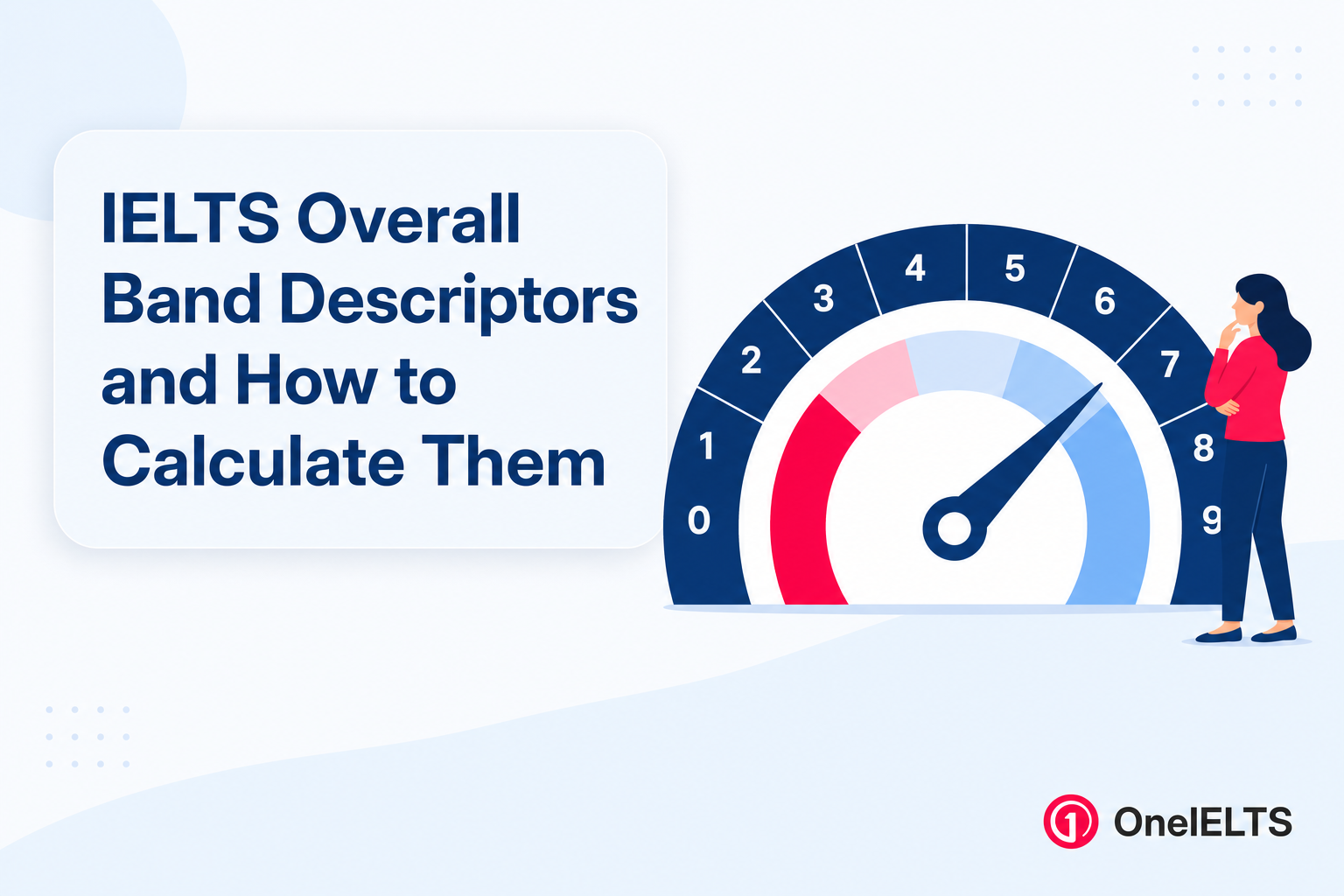
Examiners do not score your Writing and Speaking on a gut feeling; they match your answer against IELTS band descriptors, the published marking criteria that define each band from 1 to 9. Writing and Speaking each carry four equally weighted criteria worth 25% apiece, so one weak criterion caps the whole skill. This guide covers […]

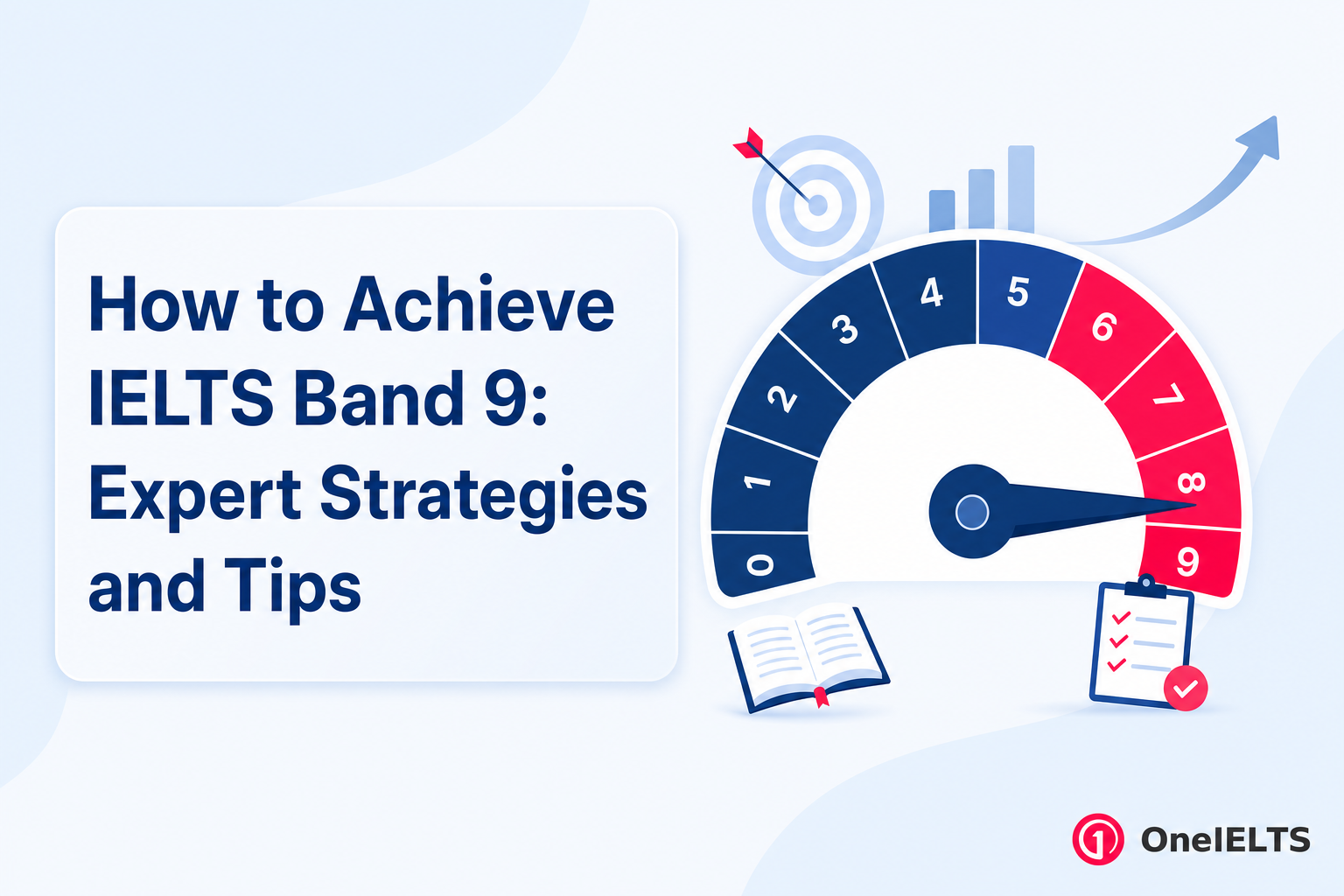
Reaching the top of the IELTS band 9 scale means demonstrating the fully operational command of an Expert User across every section. A band 9 signals near-native mastery, where you handle the language so fluently that only rare slips appear. It rewards consistency rather than flawless, robotic English. This guide shows how to reach band […]

Booking a test or starting a visa file turns on one date: an IELTS score is valid for two years from the test date. That two-year window is printed on your Test Report Form. IELTS validity is the test partners’ own recommendation, yet the binding date belongs to the receiver. Most universities and visas honour […]

Your IELTS result arrives as a Test Report Form (TRF) that records a band for each skill and one overall band, read off the same nine-band scale by every university and visa office. This guide covers the Test Report Form and the result release time, plus the day-count gap between computer and paper. It shows […]

A band 7 in IELTS marks you as a Good User — roughly CEFR C1, operationally fluent with only occasional errors. The catch most candidates miss: a 7 is often a per-section minimum, not just an overall average. A 7.5 overall with a 6.5 in Writing still fails a stream that wants 7 in every […]