The benefits of IELTS come down to one thing: it opens doors that stay shut without proof of English. One sitting can unlock study work migration plans in more than 140 countries, which is why global recognition tops every list. The seven benefits below run in order — recognition, visas, careers, real-world fluency, flexible formats, the One Skill Retake, and four-skill scoring — then we say why people pick IELTS over rivals.
Last verified: 30 June 2026
1. Global Recognition and Acceptance
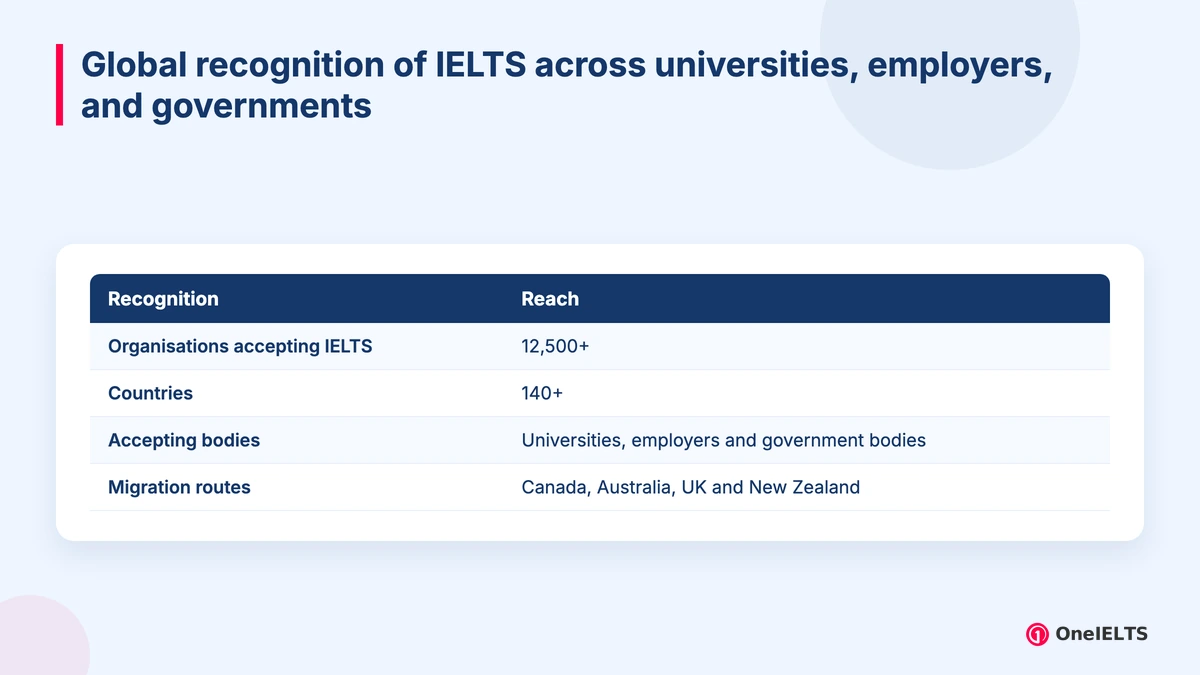
IELTS has rare global recognition. More than 12,500 organizations in over 140 countries accept it, from universities and employers to government bodies. One score backs your study plan now and a move abroad later, with no second English test.
2. Immigration and Visa Value
For immigration and visas, IELTS is the test most governments ask for in residency applications. Migration routes in Canada Australia UK and New Zealand all accept it. General Training is the version most routes want, so pick that form to work or settle.
3. Career and Job Advancement
For career advancement, an IELTS score shows the global job market you can work in English. It backs the communication skills employers want in cross-border teams. Many fields gate hiring on it: professional registration for nurses asks for a set IELTS band first.
4. Real-World English Fluency
IELTS rewards real-world fluency. Its face-to-face speaking test puts you in live conversation with a trained examiner, not a screen. You think on your feet, the way English works abroad. Genuine preparation for it builds speaking skill for daily life.
5. Flexible Testing Options
IELTS gives you flexible testing options. You pick paper or computer delivery to suit how you work. The computer route opens more dates and sends results in days. Both formats use the same questions and the same scoring, so neither shifts your band.
6. One Skill Retake Advantage
The One Skill Retake lets you resit a single section — Listening, Reading, Writing or Speaking — not the whole exam. You can book it within 60 days of a computer-delivered test, and the new mark replaces the old. No automated rival offers this.
7. Comprehensive Assessment of Language Skills
IELTS runs a comprehensive assessment of all four skills — Listening, Reading, Writing and Speaking — not just grammar. That rounded measure is why schools and visa offices trust the band. A 7.0 shows even ability, so the trusted band reads the same everywhere.
Why Should You Choose IELTS Over Other English Tests?
Test-takers choose IELTS because it pairs the widest recognition with a human, face-to-face Speaking test and a forgiving retake — things fully automated exams cannot copy. Four factors settle it for most people, set out here.
- Widest recognition. More than 12,500 bodies in 140-plus countries take IELTS, so one score rarely needs a second, test-specific English exam later on.
- Human-marked speaking. A trained examiner scores your live talk, which rewards real back-and-forth skill, not lines read into a microphone.
- One Skill Retake. You lift a single weak section within 60 days instead of re-sitting all four parts, which protects the three you already passed.
- Format choice. You pick paper or computer delivery, to match how you read and the result speed your visa or admission deadline needs.
Which Countries Accept IELTS?
IELTS is recognized in over 140 countries, including the UK Canada Australia, the USA Ireland NZ and beyond. Here “recognized” covers three things: university entry, professional sign-off, and visas — the same score serves study and visas alike. Check the full accepted countries list before you book.
Which IELTS Test Should You Choose for Your Goal?
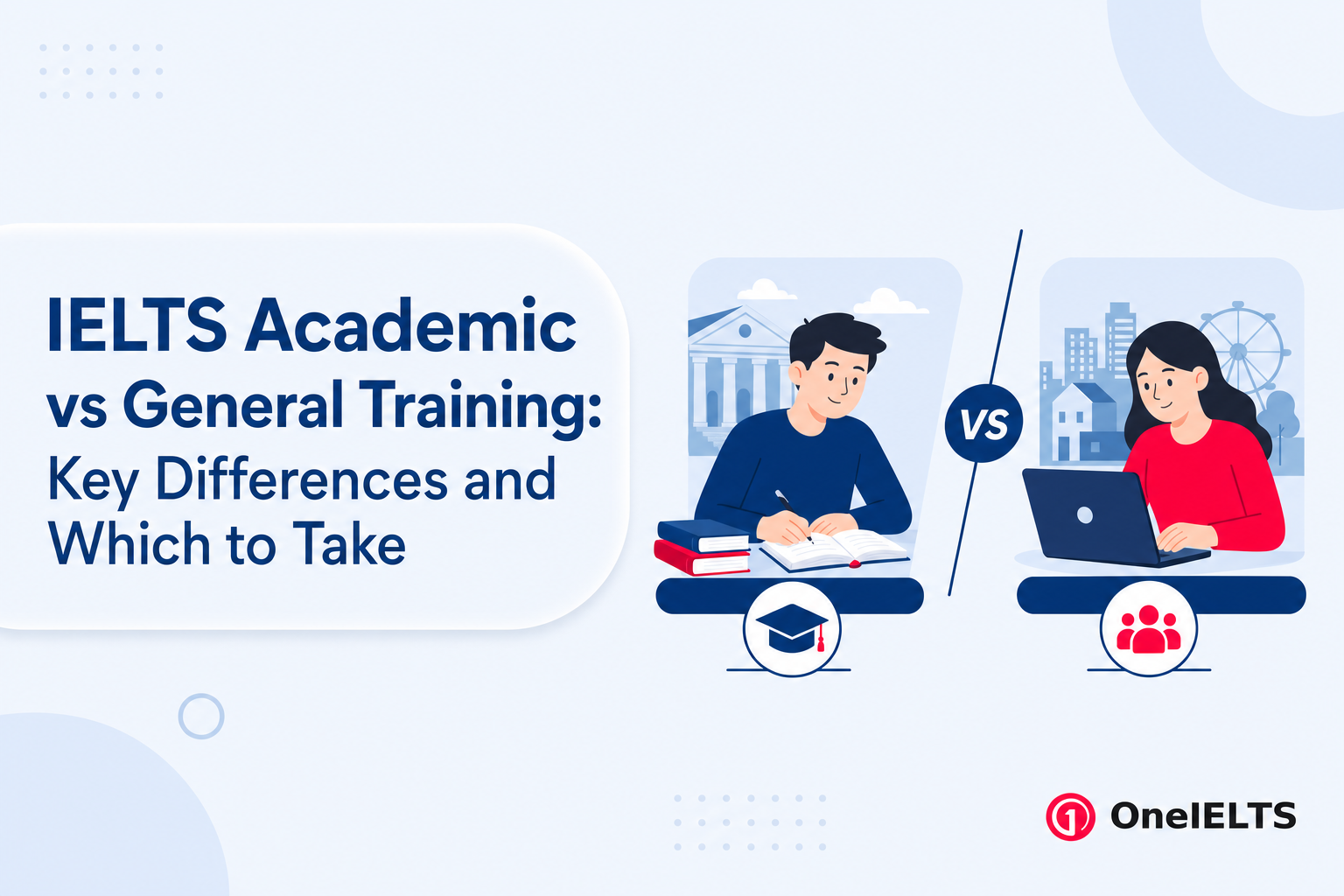
Choose Academic for study and professional registration, and General Training for migration and most work routes. Both versions use identical Listening Speaking papers, so your call really comes down to Reading and Writing, which set different tasks. Our IELTS Academic vs General Training guide lines them up side by side.
Practice for the Real IELTS Exam
Apply what you’ve learned with free, exam-style practice:
- Take a full IELTS mock test
- Practice by section: Listening, Reading, Writing, Speaking
- Structure your essays with IELTS Writing templates