To study, work or settle in Australia you’ll usually prove your English to the Department of Home Affairs, and IELTS Academic or IELTS General Training both count. The catch is how the score is read. A student visa reads your overall band, while skilled visas and permanent residency read every section, so a 6.5 overall […]

An IELTS 7.5 puts you in the “Very Good User” band, meaning fully operational English with only occasional slips. It clears the cut-off at almost every university and visa stream you are likely to target. That is the real headline: a 7.5 already meets nearly every requirement, so the only open question is whether an […]

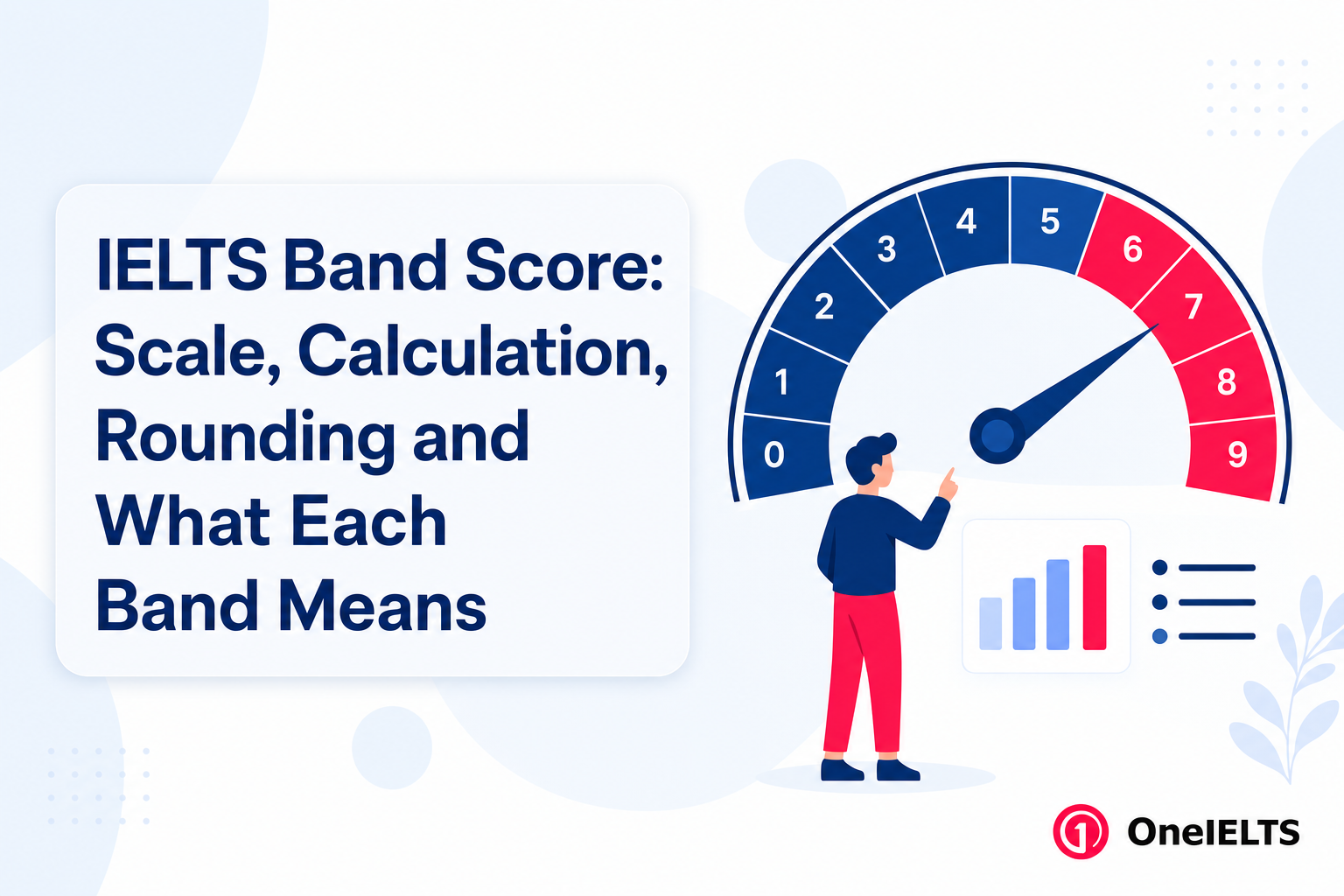
Your IELTS band score is a number from 0 to 9. It tells a university, employer or visa office how well you use English. You get a band for each of the four sections and an overall band, which is the average of the four rounded to the nearest half band. This guide covers the […]

You get four recordings, 40 questions and one hearing of each recording. That’s the whole IELTS Listening test, and it’s the same paper for IELTS Academic and General Training. Paper IELTS has ended (IDP), so you type answers on a computer and get 2 minutes at the end to check them. That’s about 3 seconds […]

In IELTS Listening, a multiple choice question gives you a spoken passage and a set of printed options, and you mark the one the speaker actually confirms. Almost every option you see also gets named in the audio, so the work is hearing confirm versus reject rather than spotting a familiar word. This guide explains […]

The IELTS Listening test draws on nine types of question, and knowing which one you face before the audio plays is half the work. Each format has a fixed answer shape — a label, a single letter, one word, or a number — so spotting the type in the reading window tells you exactly what […]

To improve listening you train your ear with deliberate technique, not background noise: shadowing, dictation and active note-taking lift comprehension far faster than passive exposure ever will. Active listening is the skill underneath every gain — engaging with meaning instead of letting sound wash past. This guide covers what active listening is and why it […]

The most reliable IELTS Listening gains come from a fixed method, not luck: the same routine on every section stops you missing answers you could hear. You start with a pre-listening routine, read and annotate questions, predict the answer type, follow signpost words, stay one question ahead, train all four accents, transfer answers carefully, and […]

Table completion gives you a grid of rows and columns to fill, and the headers tell you the category of every gap before the audio starts. You read each gap as a known type, such as a price, a date or a place, then catch that value as the speaker works through the table. This […]

A complete IELTS Listening practice test gives you four recorded sections, 40 questions, an audio file and an answer key so you can sit the real thing before exam day. This guide covers what a practice test includes and how to use one under timing. It also shows where to find free sample questions with […]

Form completion gives you a part-filled form and asks you to write the missing words and numbers as you hear them, almost always in Section 1 of the IELTS Listening test. The audio is an everyday transaction, so the gaps hold predictable personal details such as spelled names, phone numbers, addresses and dates. This guide […]

You don’t need more study hours to hit your target band. You need them in the right order. IELTS preparation means learning the four sections, practising each one against the band descriptors and checking your progress with timed mock tests. It runs on a study plan, good official resources and daily practice. The quickest gains […]