If you are booking IELTS today, the computer-delivered IELTS is the standard option at most test centres. It is the same exam answered on screen instead of on paper, sitting the same four sections scored on the same nine-band scale. This guide defines the computer-based IELTS, explains how it works, weighs its pros and cons, and shows how to prepare. The one real split from paper IELTS is results speed, and you type rather than write. Typing comfort, not difficulty, decides the format.
What Is the Computer-Based IELTS?
The computer-delivered IELTS is the standard IELTS exam taken on a computer at an official test centre, supervised in person exactly as the paper version is. You answer Listening, Reading and Writing using a keyboard and mouse at the test centre, while the questions, passages and tasks match the paper exam word for word. It covers the same four sections and reports your result on the nine-band scale that grades every IELTS taker. Nothing about the marking differs from paper; only the way you enter answers does.
How Does the Computer-Based IELTS Work?
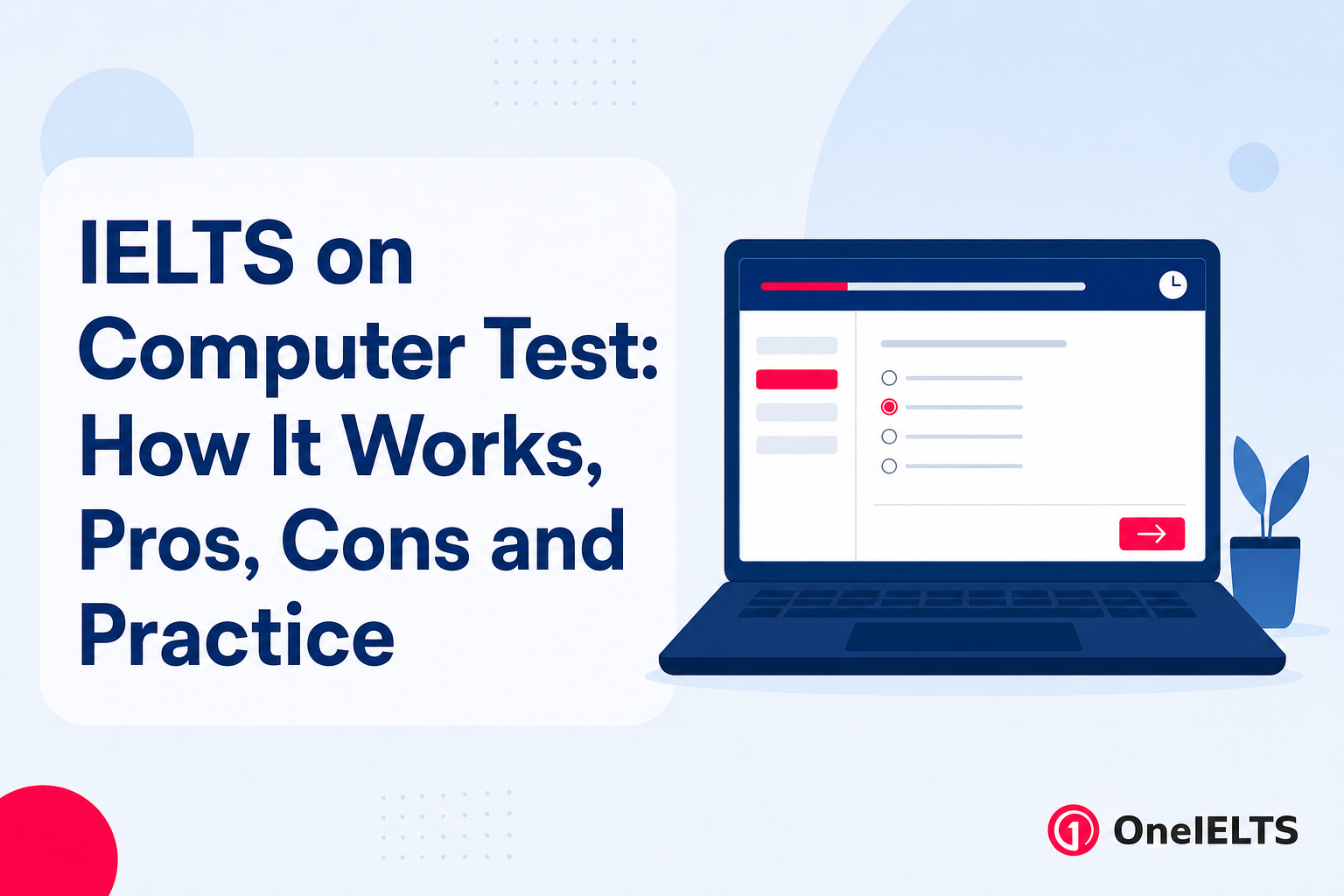
In an on-screen test you complete Listening, Reading and Writing at a computer, and Speaking stays face-to-face Speaking with a certified examiner in a separate room. You read each passage on the monitor, click or type your answers, and move through the exam using on-screen navigation.
A countdown timer sits at the top of the screen, so you always see how long each section has left. You can highlight text and add notes directly on screen, and the Writing tasks show a live word count as you type. The examiner scores Speaking in the same in-person interview used for paper IELTS.
What Are the Pros of the Computer-Based IELTS?
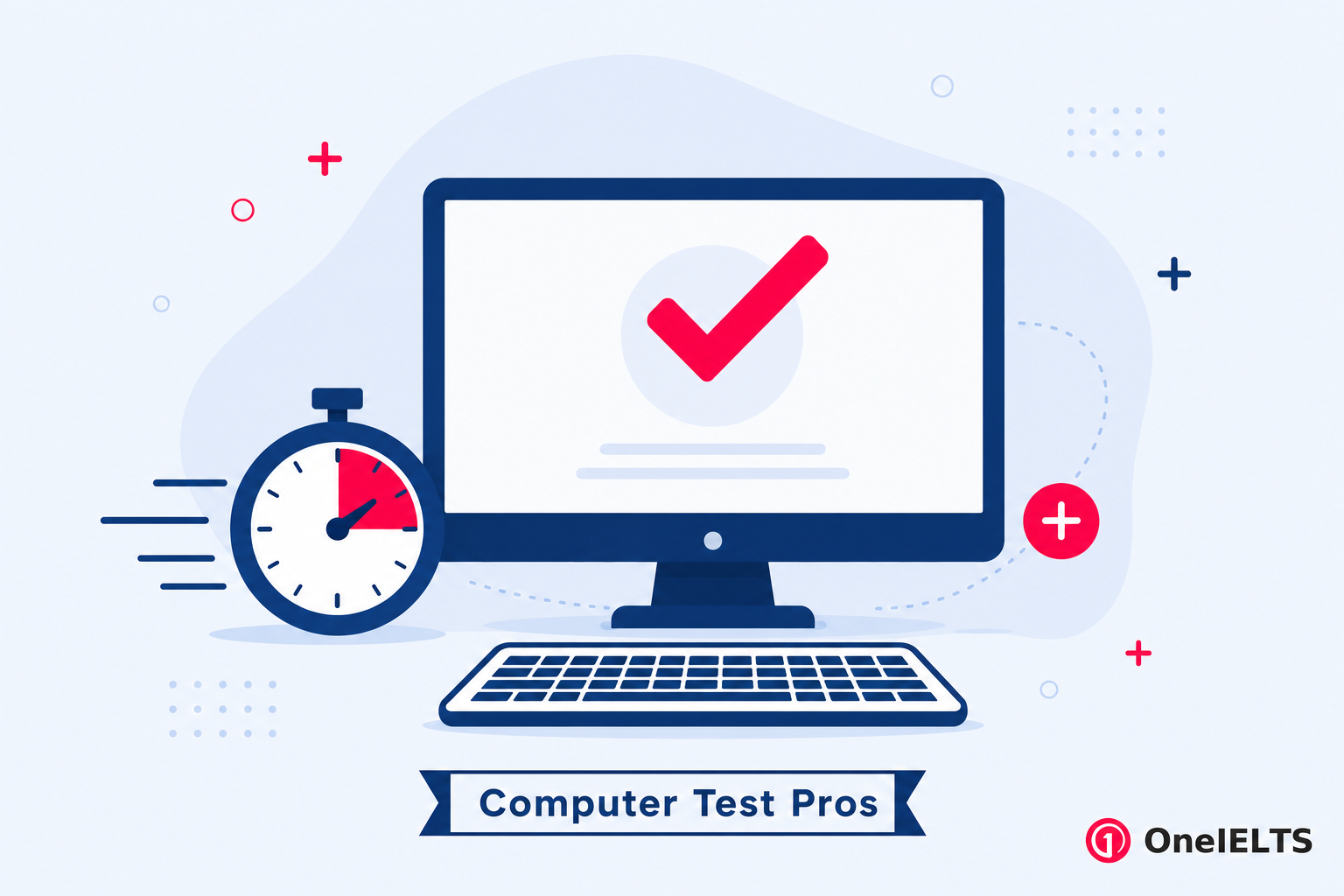
The computer format wins on speed and convenience, and these four advantages explain why most candidates now pick it.
- Faster results. Computer scores are released in 3-5 days, against roughly 13 days for paper, so you can apply to universities or visa routes sooner.
- More test dates. Centres run computer sittings several times a day across the week, giving you more test dates and far more booking flexibility.
- Easy editing. You can cut, paste and rewrite Writing answers freely, and the live word count confirms you have met each task length.
- Headphones audio. Listening plays through individual headphones audio, so you hear every recording clearly without room echo or distant speakers.
What Are the Cons of the Computer-Based IELTS?
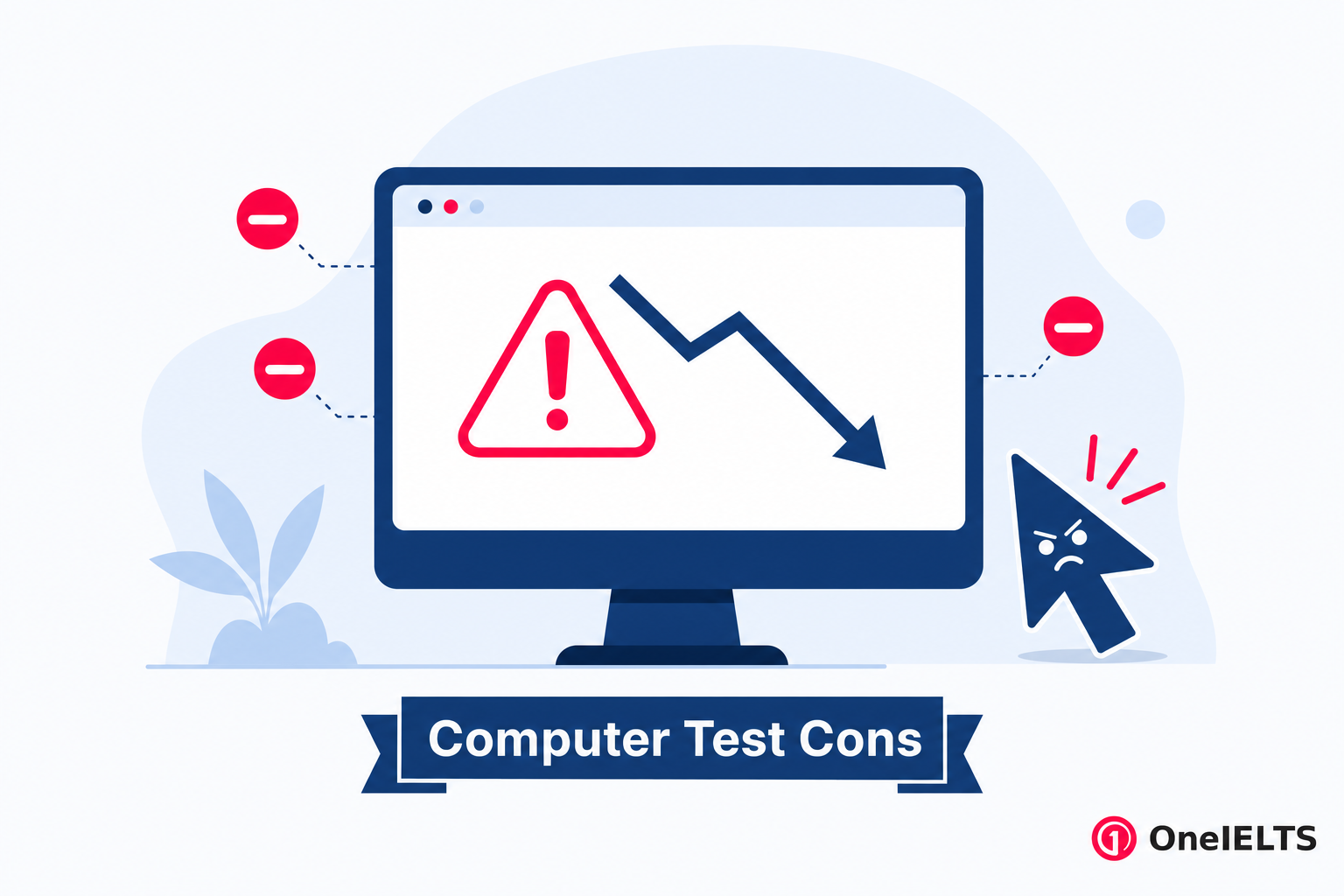
The computer format carries trade-offs that matter most if you rarely work on a keyboard, and the three drawbacks below cover them.
- Typing speed. Writing rewards a comfortable typing speed, so slow or hunt-and-peck typists may lose time they would keep with a pen.
- Screen reading. Long Reading passages mean extended screen reading, which can tire your eyes more than print over a three-hour exam.
- On-screen passages. Free annotation is limited, because you cannot scribble on on-screen passages the way you mark up paper with margin notes and underlining.
How Do You Prepare for the Computer-Based IELTS?
Preparation centres on getting fluent with the interface before exam day, and these three steps build that familiarity fastest.
- Computer-delivered demo. Work through the official computer-delivered demo from your test provider so the real layout, buttons and timer hold no surprises.
- Typing practice. Daily typing practice raises your accuracy and speed, which protects your Writing score under timed pressure.
- On-screen tools. Learn the on-screen tools — highlighter, notes and word count — and sit at least one full mock test to rehearse the whole flow.
Should You Choose Computer or Paper IELTS?
Choosing between computer vs paper comes down to how comfortable you are typing and how fast you need your results, since the exam itself is identical either way. Computer suits most candidates because it delivers faster scores and more sittings, while paper still helps people who think better with a pen. Weigh the four factors below against your own habits.
- Typing comfort. Pick computer if your typing comfort is high; choose paper if handwriting feels more natural under pressure.
- Results speed. Choose computer when results speed matters, because scores land in 3-5 days versus about 13 for paper.
- Test dates. Computer offers many more test dates each week, so it wins when your deadline is tight.
- Reading style. Prefer paper if reading long passages on a screen strains your eyes, otherwise computer is the simpler default.
Can You Take All Parts of IELTS on a Computer?
Yes, all four parts run on computer, though Speaking is still face-to-face Speaking with an examiner in a private room. Listening, Reading and Writing happen entirely on screen, while the Speaking test keeps its live, in-person format. The examiner conducts and scores that interview personally; no part of the four sections uses an automated or recorded robot.
What Is the Difference Between IELTS on Paper and Computer?
Comparing paper vs computer, the content and scoring are identical; only the input method and results speed differ. Both versions use the same questions and the same nine-band marking, so the identical content makes neither one easier. The clearest gap is timing: computer results arrive in 3-5 days, while paper results take around 13 days. For a fuller breakdown, read our paper versus computer IELTS comparison.
Last verified: 30 June 2026
Practice for the Real IELTS Exam
Apply what you’ve learned with free, exam-style practice:
- Take a full IELTS mock test
- Practice by section: Listening, Writing, Speaking
- Structure your essays with IELTS Writing templates