If a band score sits one half-point below what you needed, an IELTS Enquiry on Results lets a senior examiner re-mark your test, with the fee refunded if band rises. An EOR is a re-mark with a conditional refund, not an appeal: you pay upfront, a senior examiner reviews the sections you choose, and your money comes back only if your score goes up.
This guide covers what an Enquiry on Results is, how to apply, and how long an EOR takes. It then explains the cost, whether a score can fall, the EOR success rate, and how to choose between a re-mark and a One Skill Retake.
What Is an IELTS Enquiry on Results (EOR)?
An IELTS Enquiry on Results is a formal re-mark of one or more sections by a senior IELTS examiner, also called a revaluation. You ask the test centre to have a more experienced examiner check the marking of the sections you doubt. The senior examiner works independently of the original marker.
The outcome is not guaranteed in your favour. A score can change in three directions after a revaluation: it can rise, stay the same, or fall. That uncertainty is why you weigh the request carefully before paying.
How Do You Apply for an IELTS EOR?
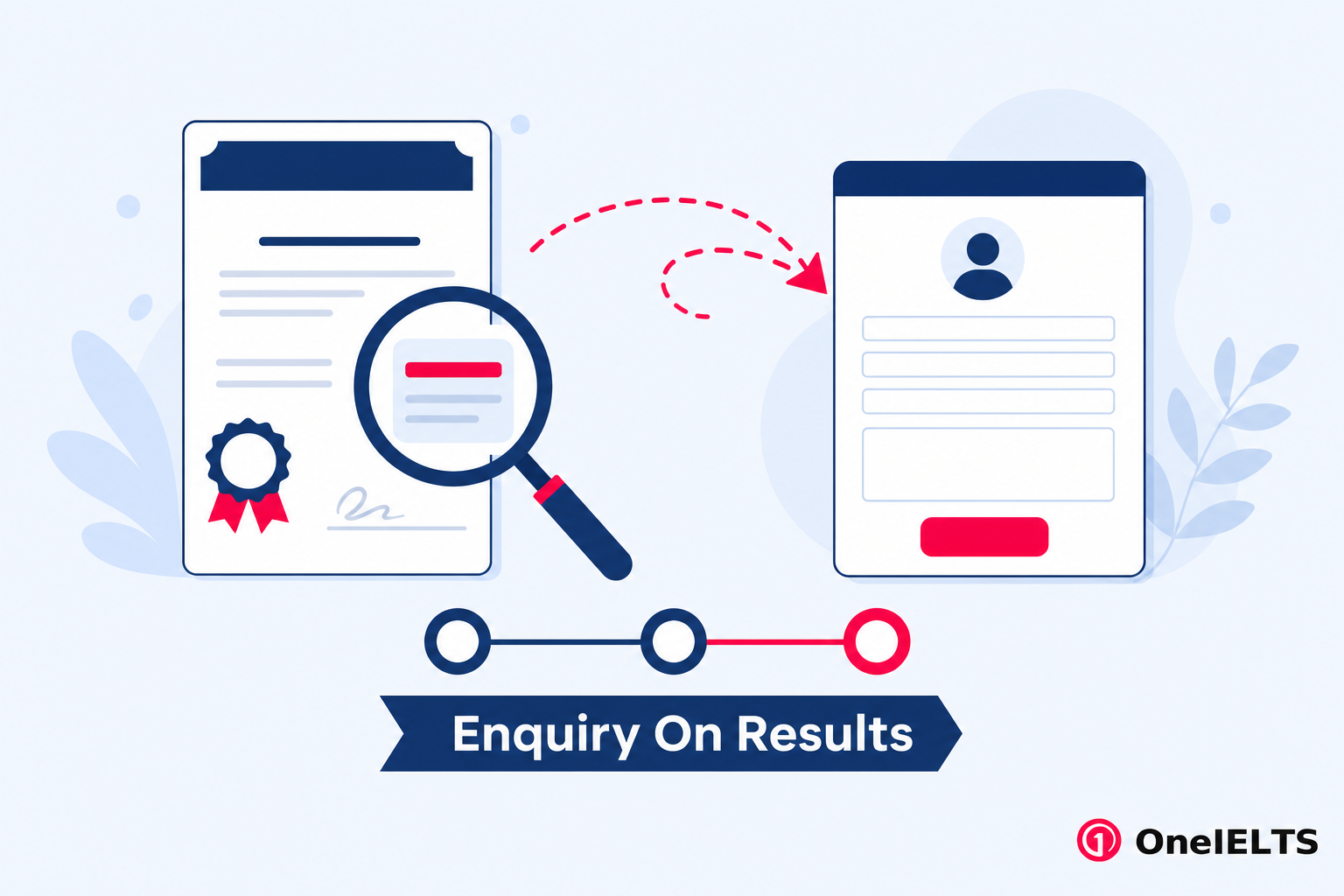
You apply for an EOR through your test centre or test-taker portal, choose which sections to re-mark, and pay the fee while a senior examiner reviews your work. The five steps below walk through the process from login to your updated result.
- Log in within six weeks. Sign in to the test-taker portal and start your Enquiry on Results within six weeks of your test date, because the window closes after that and no late requests are accepted.
- Select sections. Choose the section or sections you want re-marked; you can select sections individually, so request only the parts where you believe the original mark was too low.
- Pay EOR fee. Pay the EOR fee upfront to confirm your request, and keep the receipt, since this fee is refunded later if any of your re-marked bands increases.
- Wait for the re-mark. A senior examiner re-marks the selected sections independently of the first marker, comparing your performance against the band descriptors over the following weeks.
- Receive a new TRF. You receive the outcome by email, and the centre issues a new TRF (Test Report Form) only when your score changes; an unchanged result keeps your original form.
How Long Does an IELTS EOR Take and Cost?
An IELTS EOR re-mark usually takes 2 to 4 weeks, though busy centres sometimes need up to six weeks to return a result. The clock starts once the test centre confirms your payment, not from your test date.
The EOR fee is charged per request rather than per section, and the British Council and IDP refund it in full if any band rises. The exact figure changes by country and year, so confirm the current amount with your test centre before you pay — it is ₹14,250 in India as of July 2026. Treat the fee and the refund if band rises as live rules, since both follow the terms published at the time.
Last verified: 30 June 2026
Can Your IELTS Score Decrease After an EOR?
Yes, though rarely, a re-mark can lower band scores as well as raise them, so an EOR carries a small risk alongside its upside. The senior examiner re-marks against the full band descriptors, and that fresh judgement occasionally produces a rare decrease rather than a gain.
Most requests change nothing at all. The score is often unchanged because the original marking was already accurate, which is why you should only enquire when you have real grounds to think a section was under-marked.
What Is the IELTS EOR Success Rate?
The IELTS EOR success rate is low, with bands changing in only a minority of cases, often cited at around 5%. A ~5% change usually lands in Writing or Speaking rather than Listening or Reading, so most candidates who pay for a revaluation keep the same score.
The reason sits in how the test is marked. Listening and Reading are key-marked sections scored against a fixed answer key, so a re-mark rarely moves them. Writing and Speaking are judgement-based, which makes Writing/Speaking more likely to shift when a second senior examiner applies the descriptors. That low success rate reflects this split between objective and subjective marking.
Should You Apply for an IELTS Re-mark?
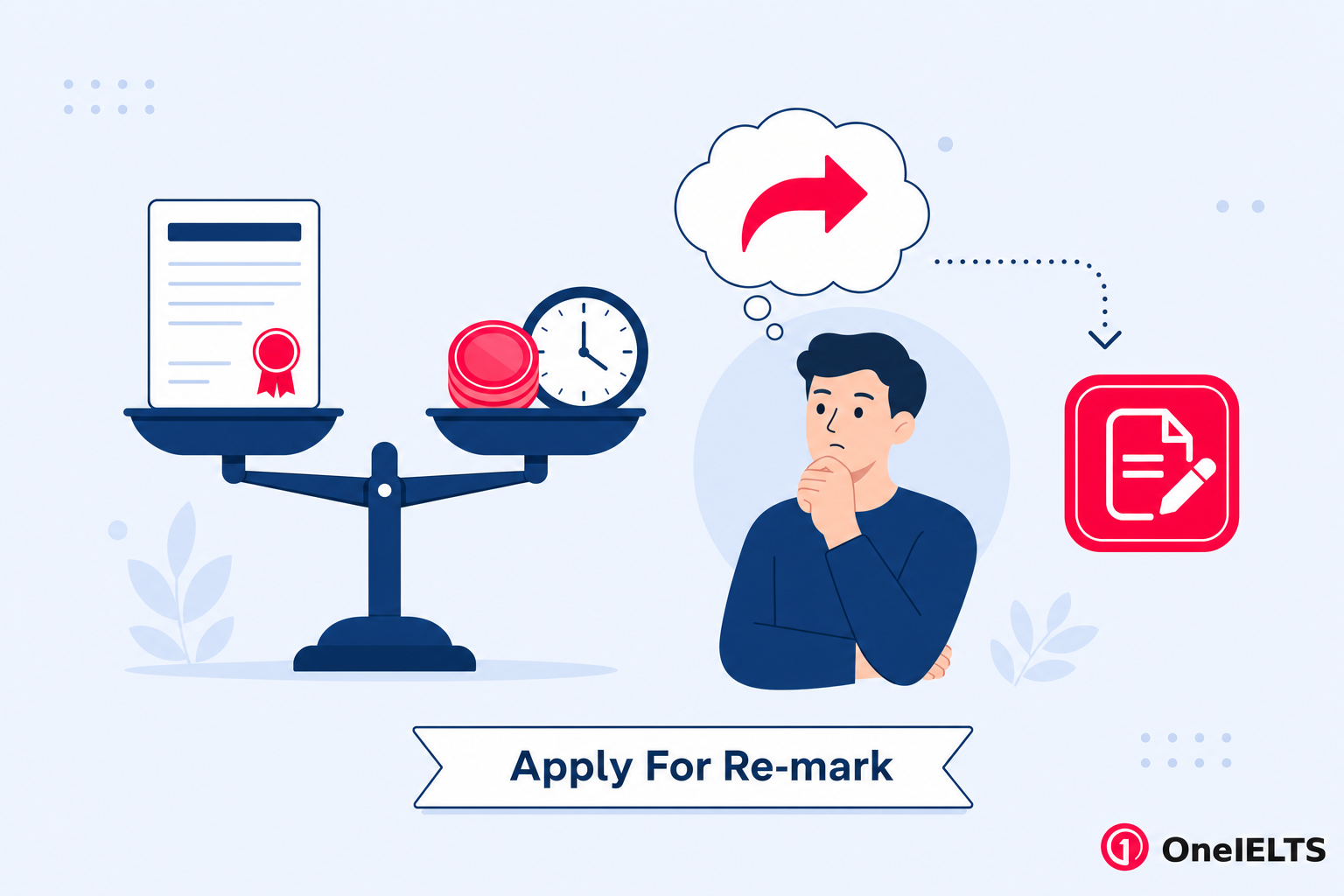
A re-mark earns its fee when one productive section sat just under your target and you hold concrete reasons to suspect under-marking, not simply disappointment with the result. The decision factors below help you judge whether an EOR fits your situation.
- How close to next band you were. A 6.5 that needed 7.0 in one section is the strongest case, since a half-band lift on a single skill can clear your requirement.
- Which section felt under-marked. Writing and Speaking re-mark requests move most often, so a Writing Speaking re-mark on a borderline essay or interview pays off more than a Reading one.
- Your deadline. Weigh your deadline against the 2 to 4 week wait, because a university or visa cut-off that lands before the result returns makes the enquiry pointless.
- Whether a retake is faster. A One Skill Retake alternative suits you if you would rather re-sit one section quickly than wait on a re-mark of your existing answers.
- The refund safety net. The refund if band rises softens the downside, so a well-grounded enquiry costs nothing when it succeeds and only the fee when it does not.
Is the EOR Fee Refunded If Your Score Increases?
Yes, the EOR fee is refunded if any section band goes up after the re-mark. There is no refund if unchanged scores come back or if a band falls, so the refund if band rises is the only condition that triggers repayment. This conditional refund separates an EOR from a flat appeal charge. You can confirm the updated figure on your IELTS result page once the re-mark closes.
Should You Choose an EOR or a One Skill Retake?
Choose an EOR if you believe a section was under-marked; choose a One Skill Retake if you want to re-sit and improve one skill. An EOR re-mark reviews the answers you already gave, while a One Skill Retake re-sit gives you a fresh attempt at a single section. The retake is faster than waiting on a queue but requires re-sitting and a new fee, so the trade-off is faster vs cheaper. See how a single-section resit works in our IELTS One Skill Retake guide before you commit.
Practice for the Real IELTS Exam
Apply what you’ve learned with free, exam-style practice:
- Take a full IELTS mock test
- Practice by section: Listening, Reading, Writing, Speaking
- Structure your essays with IELTS Writing templates