To improve listening you train your ear with deliberate technique, not background noise: shadowing, dictation and active note-taking lift comprehension far faster than passive exposure ever will. Active listening is the skill underneath every gain — engaging with meaning instead of letting sound wash past.
This guide covers what active listening is and why it matters, then the techniques that build it. It moves on to the daily habits that lock it in, how long results take, which methods give the strongest returns, and how the same drills raise your IELTS Listening band.
What Is Active Listening and Why Does It Matter?
Active listening is engaging intentionally with meaning rather than passively hearing sound. It forms the foundation of every listening gain, IELTS included. When you choose meaning over sound, your brain predicts, checks and corrects in real time instead of drifting. That intentional engagement separates a candidate who follows a fast recording from one who loses the thread. Active listening trains the focus that passive hearing never builds.
What Techniques Improve Your Listening Skills?
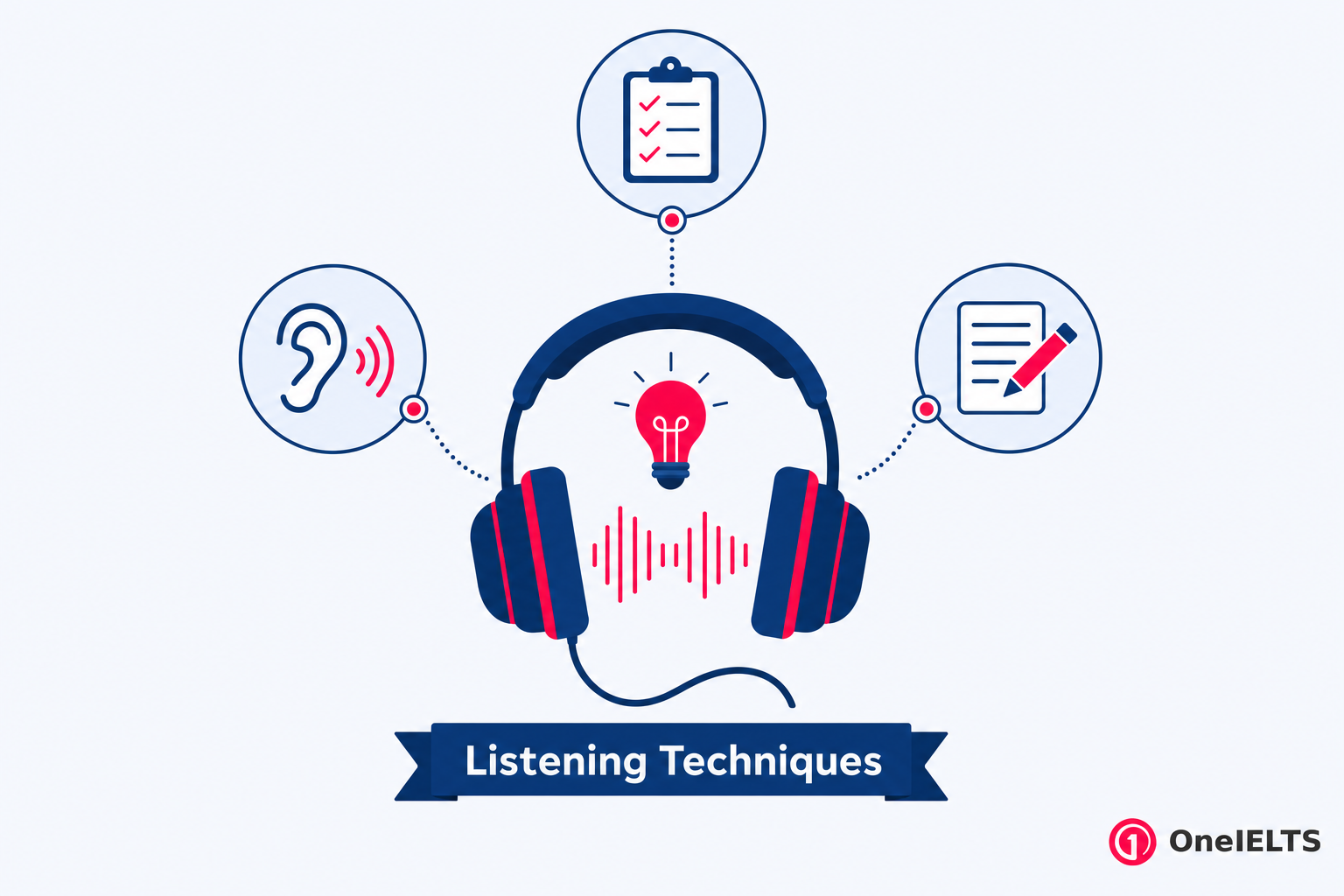
The core techniques are deliberate drills that force your ear to work harder than ordinary listening does. Each one targets a different weakness — sound recognition, spelling, focus or recall. Six techniques worth practising are numbered here, each with the action it trains.
- Shadowing. You repeat audio aloud a beat behind the speaker, copying rhythm and stress, which sharpens sound recognition and stops you mishearing connected speech.
- Dictation. You transcribe short clips word for word, then check against the script, which trains spelling accuracy and catches the small words you skip.
- Active note-taking. You jot keywords and numbers while listening rather than after, which keeps attention anchored and builds recall under time pressure.
- Predicting what comes next. You guess the upcoming word or idea from context, which primes your ear and makes the real answer faster to confirm.
- Summarising in your own words. You restate a clip’s gist aloud after one play, which proves you grasped meaning, not just isolated words.
- Varied-accent exposure. You listen across British, Australian and Indian speakers, which removes the accent shock that derails an otherwise prepared listener.
What Daily Habits Build Listening Skill?
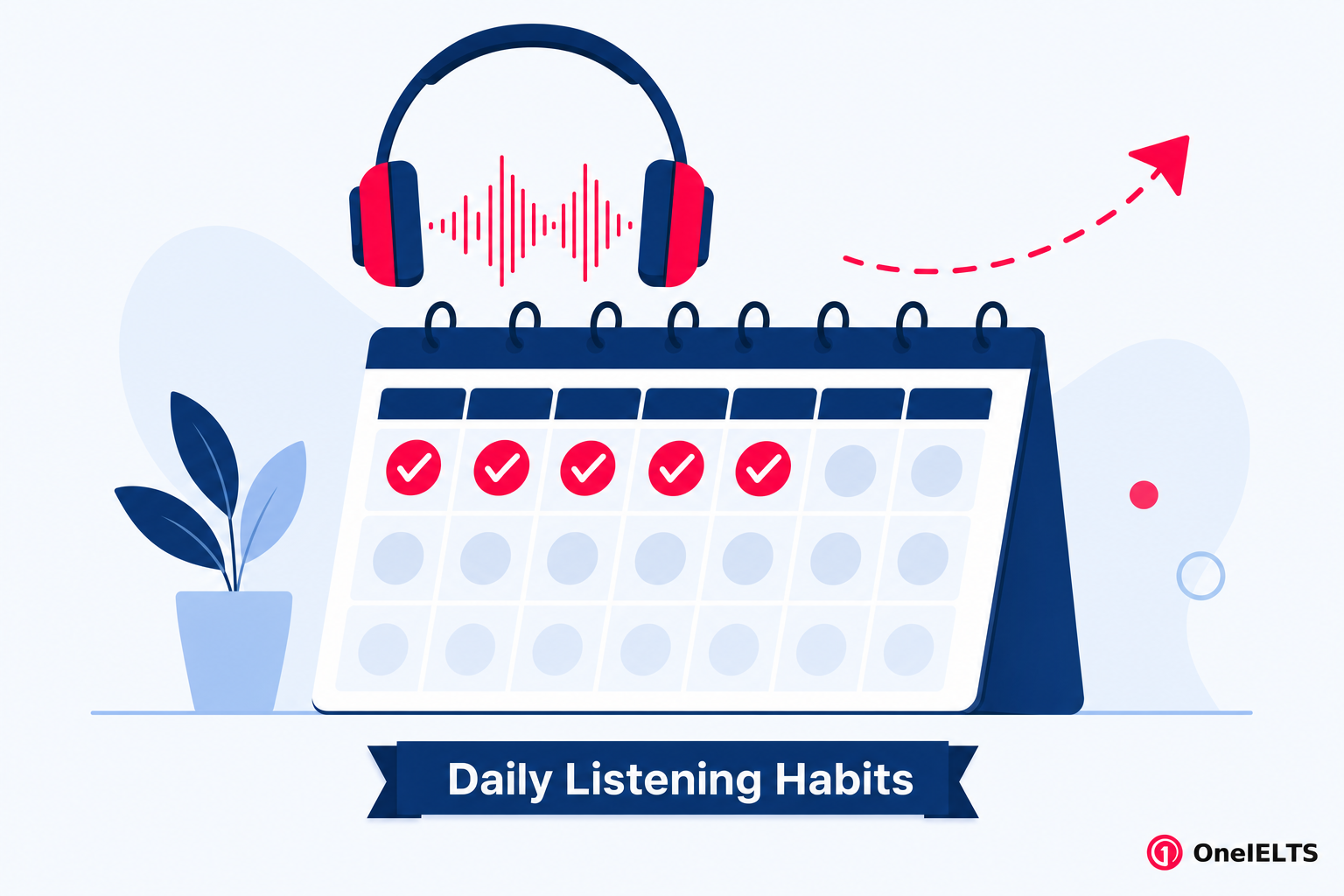
Habits matter more than marathon sessions, because the ear adapts through frequent, short contact with real English. A daily block you actually repeat beats an occasional three-hour cram every time. The daily habits that compound into a stronger ear appear in the following list.
- A short daily block. Fifteen focused minutes every day, with full attention and no phone, trains the consistency that a once-a-week session can never match.
- English podcasts news. A daily podcast or news bulletin feeds your ear authentic pace and vocabulary, exposing you to real speech rather than slowed classroom audio.
- Subtitles off, then on. You watch a clip with subtitles off first, then replay with them on, which forces real comprehension before you lean on the text.
- One dictation drill. A single short dictation drill each day, checked against the transcript, turns vague listening into measurable spelling and detail accuracy.
- A weekly full practice test. One timed full test a week builds stamina and shows whether your daily habits are moving the needle on score.
How Long Does It Take to Improve Listening Skills?
With daily deliberate practice, noticeable gains appear in four to eight weeks. Consistency matters more than session length: fifteen focused minutes a day for six weeks beats two long sessions a month, because the ear adapts through repeated, spaced contact. Most candidates who practise daily follow recordings more easily by week four, with cleaner detail recall by week eight. Deliberate practice on a weak spot drives that timeline; aimless replaying stretches it out.
Which Techniques Build Stronger Listening Skills?
The methods below repay deliberate practice and outperform passive listening, which is the single biggest reason most learners plateau. Five techniques that build the strongest listening gains are listed here, each tied to the deliberate effort it demands.
- Shadowing. Repeating audio aloud in real time, rather than just hearing it, forces deliberate practice of stress and rhythm that passive replaying never delivers.
- Dictation and dictogloss. Transcribing a clip, then rebuilding it from notes, makes you process every word deliberately instead of catching the gist and moving on.
- Note-taking. Capturing keywords as you listen keeps engagement active, so you train attention under pressure rather than zoning out through a long recording.
- Predicting. Anticipating the next idea before it arrives turns listening into an active hypothesis you confirm, sharpening speed far more than passive intake.
- Using authentic audio. Practising with real podcasts, lectures and interviews exposes your ear to genuine pace and accent that graded classroom clips deliberately strip out.
How Do These Techniques Improve Your IELTS Listening?
These same drills transfer directly to the IELTS Listening test, because the test rewards the exact abilities deliberate practice builds. Each technique maps onto a scored skill. How each technique converts into an IELTS Listening gain is set out point by point.
- Shadowing builds paraphrase recognition. Copying connected speech trains you to match what you hear against reworded answer options, the trap that costs most candidates marks.
- Dictation builds spelling accuracy. Transcribing daily means you write answers exactly as required, so a correctly heard word is not lost to a misspelling.
- Predicting builds prediction speed. Anticipating the next word before the audio reaches it lets you confirm gaps fast, a direct advantage in prediction-heavy form-completion tasks.
- Note-taking and authentic audio build stamina. Sustained focus across varied accents prepares you for the unbroken thirty-minute recording, so concentration holds through Section 4.
What Are the Main Barriers to Improving Listening?
The main barriers are distraction, limited vocabulary and unfamiliar accents. Target your specific barrier first rather than practising everything at once: a wandering mind needs focus drills, a vocabulary gap needs reading and dictation, and unfamiliar accents need varied-accent exposure. Diagnose which one costs you the most marks, then aim your daily block at it. Our IELTS listening tips guide breaks down each barrier with targeted fixes.
Last verified: 30 June 2026
Practice IELTS Listening
Put this into practice with real, exam-style questions: