Form completion gives you a part-filled form and asks you to write the missing words and numbers as you hear them, almost always in Section 1 of the IELTS Listening test. The audio is an everyday transaction, so the gaps hold predictable personal details such as spelled names, phone numbers, addresses and dates. This guide explains what these questions are and how to answer them step by step. It also covers the details forms test, why Section 1 uses this format, what a real form looks like, the best tips, and how to practise. The skill it rewards is catching the right detail accurately, not decoding hard ideas.
What Are IELTS Listening Form Completion Questions?
Form completion asks you to fill a form with personal or transactional details you hear in the recording, usually in Section 1. The examiners take a short conversation, leave gaps on a printed form, and you write the missing word or figure into each one. These questions test names, numbers, dates and addresses, the concrete personal details of a real booking. Each gap carries a strict word limit of one, two or three words and a number. So you note the answer in the shortest correct form and spell every name exactly as the speaker gives it.
How Do You Complete Form Completion Questions?
You answer form completion by predicting what each gap needs, then catching that detail as the speaker says it. Reading the form first lets you predict field type for every gap, so your ear is ready for the right kind of answer. The five steps for working through a form task are set out in order below.
- Predict field type from the form. Scan every gap before the recording begins and decide whether it expects a name, a number, a date or an address.
- Listen for spelled names and digits. Speakers spell surnames letter by letter and read phone numbers digit by digit, so track digits and dates as each one lands.
- Write exactly what you hear. Note the answer in the speaker’s own words; do not paraphrase, correct or expand it into something you think sounds better.
- Watch the word limit. Stay inside the stated word limit of one, two or three words and a number, because an over-long answer is marked wrong.
- Check spelling at the end. Use the review time to confirm every name and place reads correctly, since one wrong letter loses the whole mark.
What Details Are Commonly Tested in Forms?
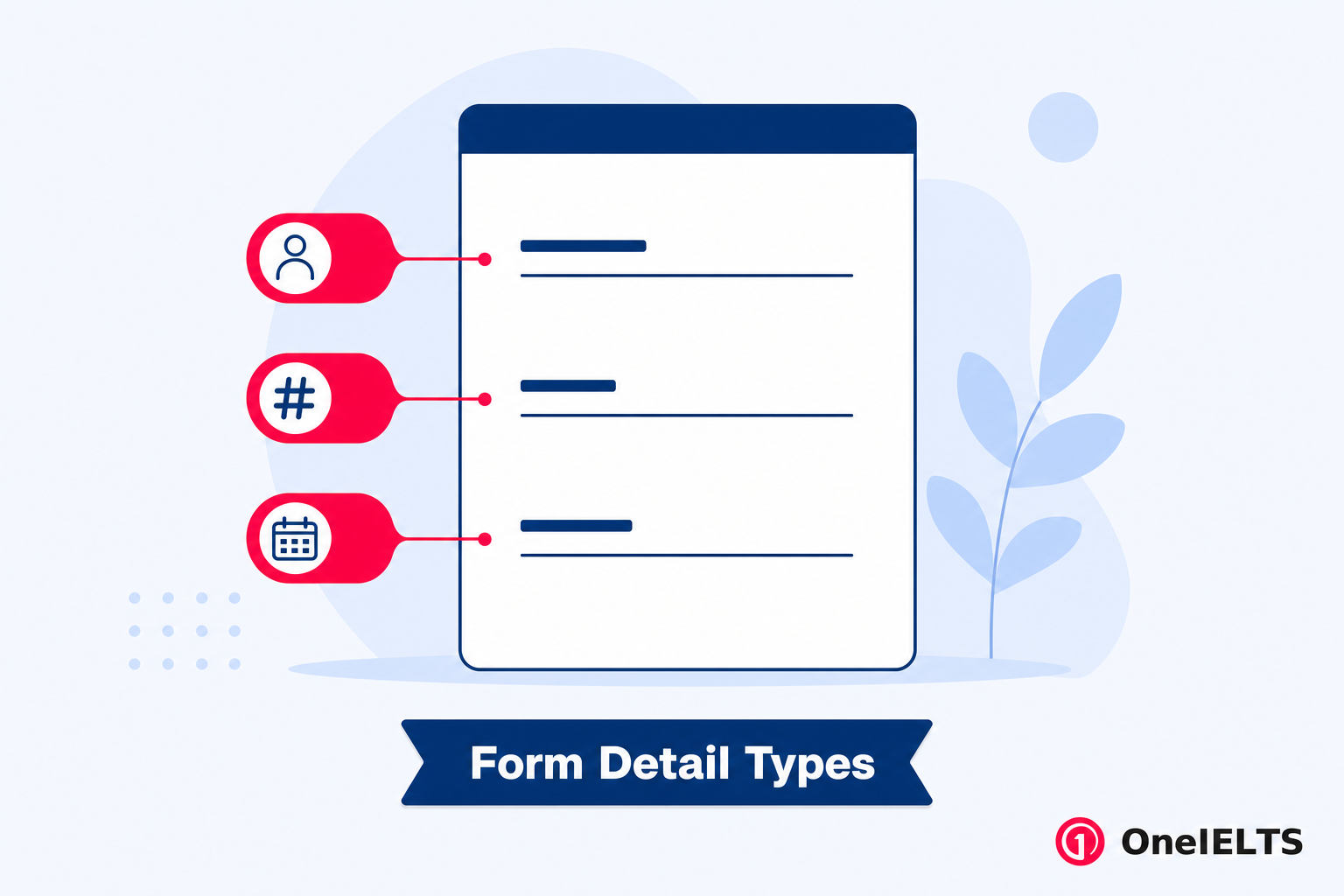
A handful of answer categories repeat across almost every form completion task, and knowing them lets you predict most gaps before the audio plays. The recurring detail types you should expect are listed here.
- Names spelled out. Surnames and place names are read letter by letter, so you must follow the spelling and write it exactly.
- Phone numbers. Speakers read phone numbers one digit at a time, often in groups, and you record each figure in order.
- Addresses. House numbers, street names and postcodes combine in addresses, so you catch both the figures and the spelled words.
- Dates and times. Appointment days, months and clock times appear often, written in the format the speaker uses.
Why Does Section 1 Use Form Completion?
Section 1 is an everyday transaction, so a form is the natural way to test names, numbers and details. The recording is a conversation like booking a tour or registering for a class. One speaker reads out information and the other writes it down. This makes Section 1 the most accessible section of the Listening test, because the language stays practical. The answers are concrete personal details rather than abstract ideas, mirroring what you would genuinely fill in.
What Does a Form Completion Question Look Like?
A typical Section 1 form looks like a booking or registration sheet with labelled gaps for you to fill. The example below shows a tour-booking form, where each blank waits for a detail read out in the recording.
RIVERSIDE TOURS - BOOKING FORM

Name: __________ (surname spelled out)

Phone number: __________

Date of tour: __________

Pick-up address: __________

Number of people:__________
This Section 1 form holds gaps for names, numbers, dates and addresses, the standard mix of names numbers dates you will meet. You write exactly what you hear into each gap, spelled correctly and inside the stated word limit. Spelling accuracy decides the mark, because the examiner accepts only the precise detail the speaker gives.
What Are the Best Tips for Form Completion?
The strongest tactics for form completion target the two things that actually cost marks: mishearing a detail and breaking the answer rules. Master spelling and number patterns before test day, and you spend the audio listening rather than puzzling over format. The five tips that lift your accuracy are set out below.
- Learn the spelling alphabet. Train your ear on every letter sound, especially confusable pairs like M and N or G and J, so spelled names never trip you.
- Know number and date formats. Practise the number formats speakers use for phone numbers, years and dates, including “double four” and “the third of May”.
- Expect corrections. Speakers often change a detail mid-sentence, saying “sorry, make that Tuesday”, so the final value you hear is the one you write.
- Respect the word limit. Count your words against the stated word limit every time, because writing four words where three are allowed loses an otherwise correct answer.
- Never leave a blank. Always write your best guess, since an empty gap scores zero while a sensible attempt sometimes earns the mark.
How Can You Practise Form Completion With Audio?
Drill Section 1 form tasks with timed audio and check spelling against the answer key. Play short Section 1 audio of booking and registration tasks, fill the form under time pressure, then run a spelling check on each gap letter by letter. Isolate the type before you sit a full test, because that builds the speed and accuracy it needs. You can work through graded recordings in our IELTS Listening practice test collection.
Last verified: 30 June 2026
Practice IELTS Listening
Put this into practice with real, exam-style questions: