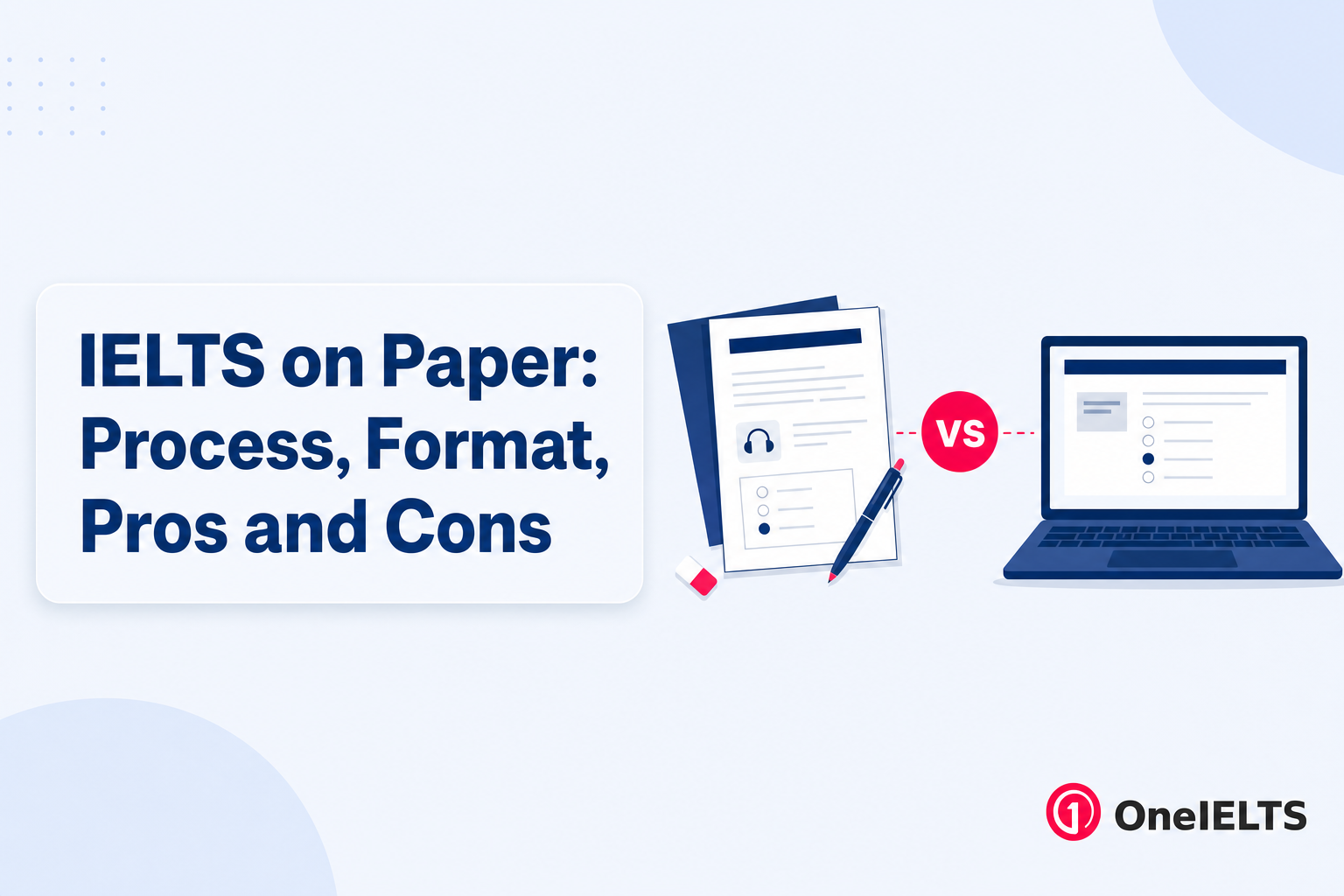
If you sit IELTS on paper, you write your Listening, Reading, and Writing answers by hand at a test centre, then speak face-to-face with an examiner on a separate day. The paper-based IELTS keeps all four sections and the same band scale as the computer test, so only the medium changes, not the content or […]

If you are moving abroad for work or settlement, the test most immigration programmes ask for is IELTS General Training, not Academic. It measures the everyday and workplace texts you actually read and the practical English you use on the job. That focus on migration and work is the only real difference from Academic, because […]

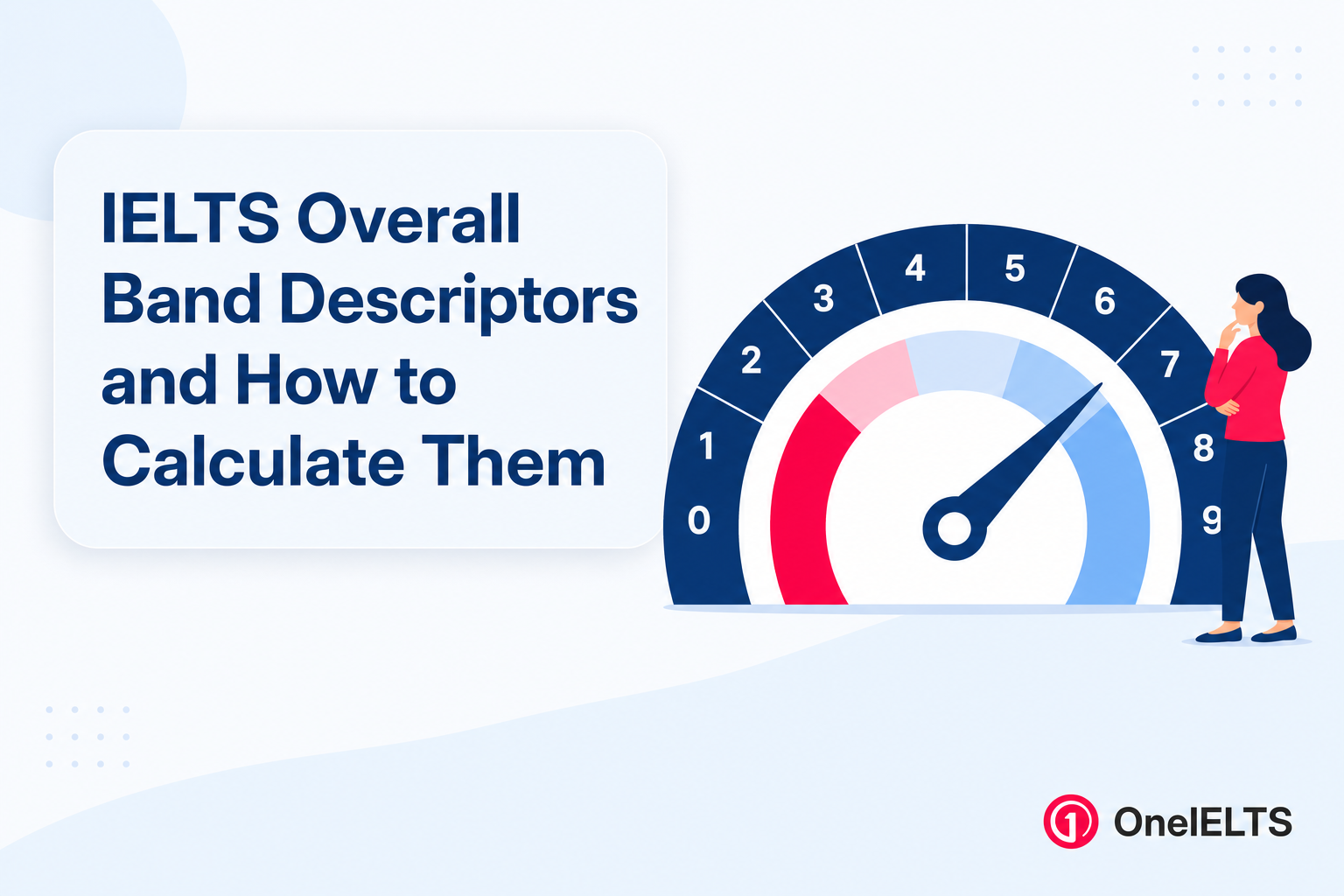
Examiners do not score your Writing and Speaking on a gut feeling; they match your answer against IELTS band descriptors, the published marking criteria that define each band from 1 to 9. Writing and Speaking each carry four equally weighted criteria worth 25% apiece, so one weak criterion caps the whole skill. This guide covers […]

You can study abroad without IELTS in 2026 by using an alternative the university already accepts. The usual swaps are an MOI certificate, a Duolingo English Test result, or one of the TOEFL PTE alternatives. This guide ranks eleven countries, then covers the risks, work rules, and the proofs that replace the test. The eleven […]

If you trained in medicine abroad and want to practise in the UK, Australia or Canada, your IELTS for doctors result is the language proof your medical regulator checks before granting medical registration. The bar is set by the council, not the visa: the UK GMC asks for 7.5 overall with 7.0 each band, and […]

An IELTS examiner is a certified teacher who marks the Speaking and Writing tests against official band descriptors. Listening and Reading are scored from an answer key instead. The job is gated by your teaching credentials, not by your own IELTS result. You need a degree, a recognised teaching qualification such as CELTA/DELTA, and real […]

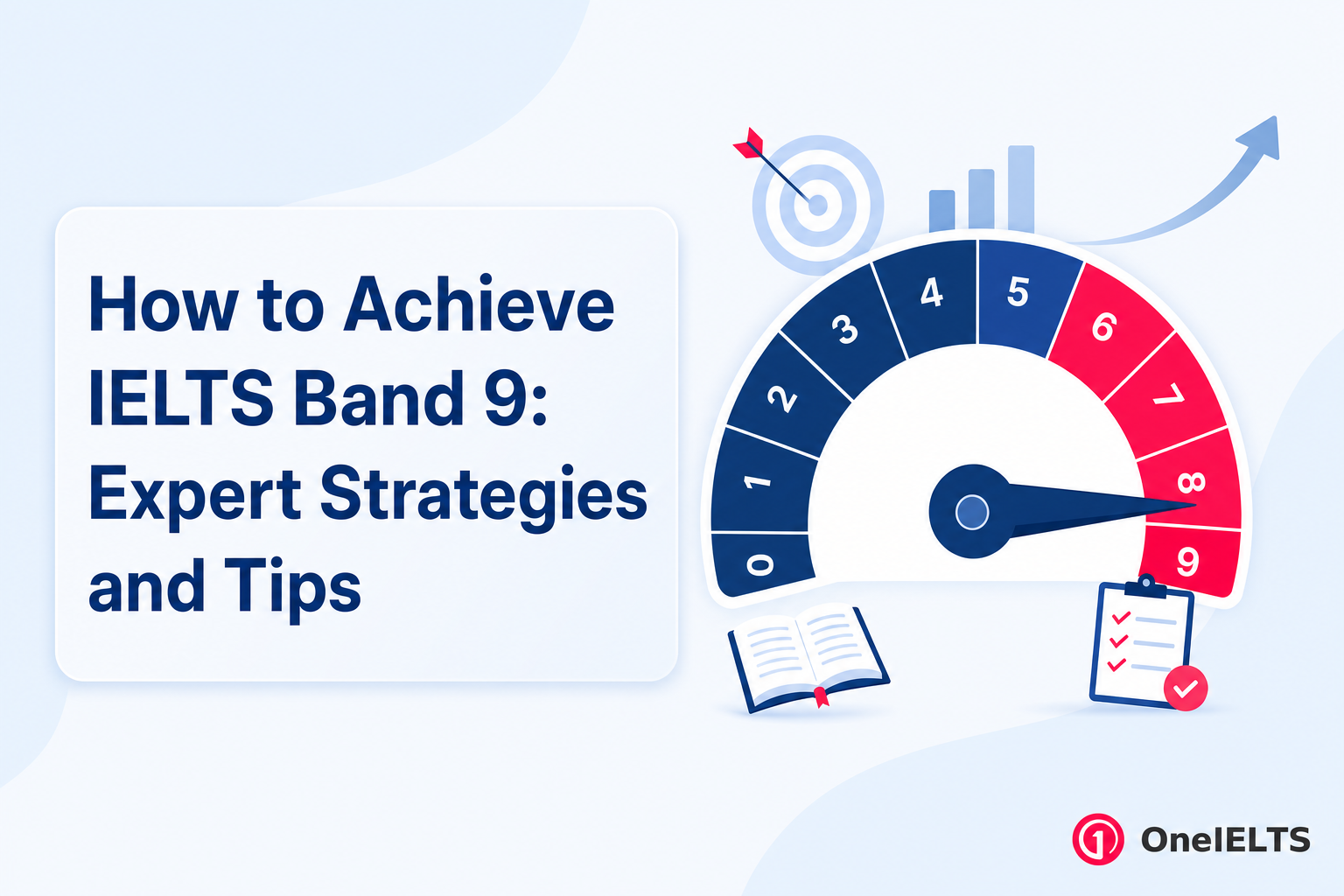
Reaching the top of the IELTS band 9 scale means demonstrating the fully operational command of an Expert User across every section. A band 9 signals near-native mastery, where you handle the language so fluently that only rare slips appear. It rewards consistency rather than flawless, robotic English. This guide shows how to reach band […]

Plans change after you book IELTS. A visa interview moves, an illness lands the week of the test, or a university deadline shifts. When that happens you don’t lose your seat. An IELTS exam reschedule moves your booked test to a new date through your IDP or British Council account, and the rule that decides […]

The right IELTS study plan is the one that closes your band gap, not the one that fits a calendar. Start with a diagnostic mock to fix your baseline. Then measure the distance to your target band and pick the schedule that matches it. A small gap needs roughly a month, a moderate gap two […]

The honest answer is that IELTS difficulty is relative, not absolute: the test feels as hard as the gap between your current English and your band target. A 6.0 is within reach for most candidates after a few weeks of practice. Each half-band above 7.0, though, takes disproportionately more work, and the Writing section is […]

Booking a test or starting a visa file turns on one date: an IELTS score is valid for two years from the test date. That two-year window is printed on your Test Report Form. IELTS validity is the test partners’ own recommendation, yet the binding date belongs to the receiver. Most universities and visas honour […]

Your IELTS result arrives as a Test Report Form (TRF) that records a band for each skill and one overall band, read off the same nine-band scale by every university and visa office. This guide covers the Test Report Form and the result release time, plus the day-count gap between computer and paper. It shows […]