IELTS Reading multiple choice gives you a question or an unfinished sentence, three or four answer options, and one job: pick the option the reading passage supports. The catch is that the wrong options, called distractors, are built from words that genuinely appear in the text, so matching vocabulary picks the trap. This guide covers […]

You have just attempted the exploration passage and you want to know whether your answers are right. It is Reading Passage 3 of Cambridge 15 Test 1, the third and last Academic Reading text of that paper. This page gives you the question map and the reasoning behind each answer, not a reprinted passage and […]

IELTS Academic Reading gives you three long texts from current books, journals, magazines and newspapers, plus forty questions and one hour. Subject knowledge earns nothing here. Paraphrase and academic vocabulary decide the band. This page covers the paper’s structure, its recurring topics, its real difficulty, and the question types that dominate it. It then works […]

IELTS Reading short answer questions ask you a direct question about the passage and expect the answer in the passage’s own wording, inside a stated word limit. You don’t compose anything. You copy verbatim, and an answer in your own words scores nothing even when the fact is right. This guide covers the task, the […]

IELTS Reading note completion gives you a set of incomplete notes and asks you to fill each gap with words taken from the passage. The notes are compressed fragments under headings and dashes, so the layout carries the meaning and shows what each gap needs. Two rules decide the marks. A word limit caps every […]

IELTS Reading summary completion gives you a shortened version of part of the passage with gaps, and you fill each gap using words from that passage. The gap is bounded twice. It has to match the passage and fit the grammar of the sentence around it, so working out the part of speech a gap […]

A band 9 in IELTS Reading is an error budget: forty questions, two or three marks of tolerance. This page covers what the band means, why candidates stall at band 8, how to split the hour, and the core strategies and accuracy habits that hold. Then comes the diagnostic loop, how band 9 scorers prepared, […]

Sixty minutes, three sections, forty questions, and not one spare minute to copy anything out. That is the IELTS Reading test format, and the test owners publish those numbers as rules rather than advice. Two papers run on it: IELTS Academic Reading and IELTS General Training Reading. Reading is the component where the two differ […]

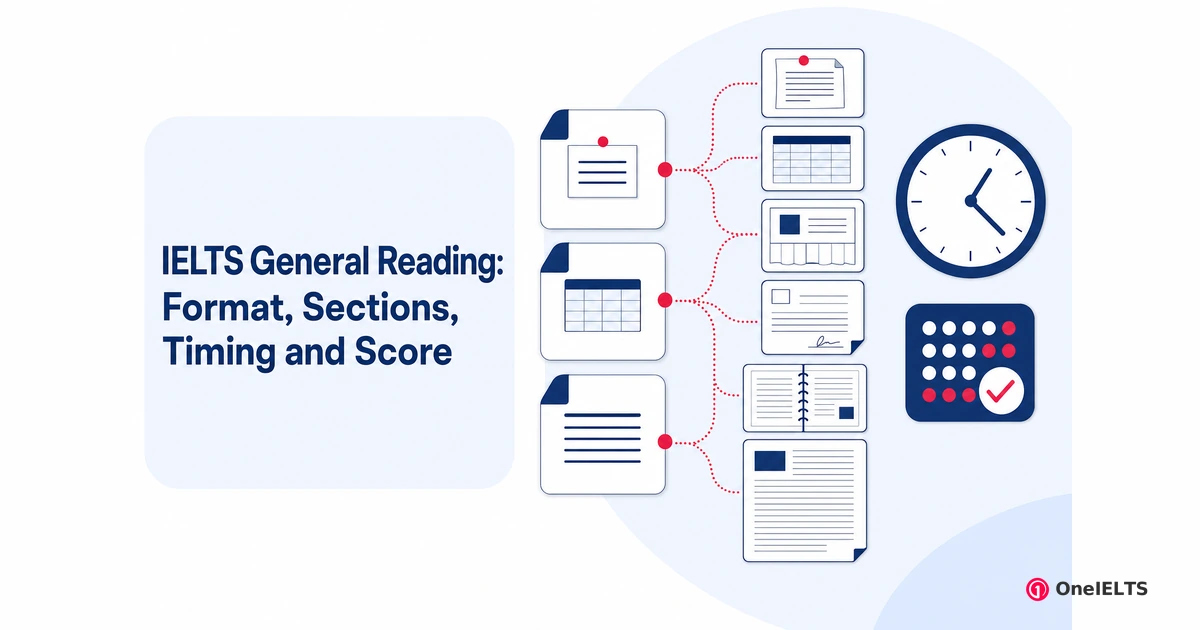
IELTS General Reading runs sixty minutes and forty questions across three sections, and what you read is notices, timetables, staff handbooks, contracts and one longer general-interest text. Nothing on the paper looks like a journal article. The official name is IELTS General Training Reading, while candidates and search boxes say IELTS General Reading and IELTS […]

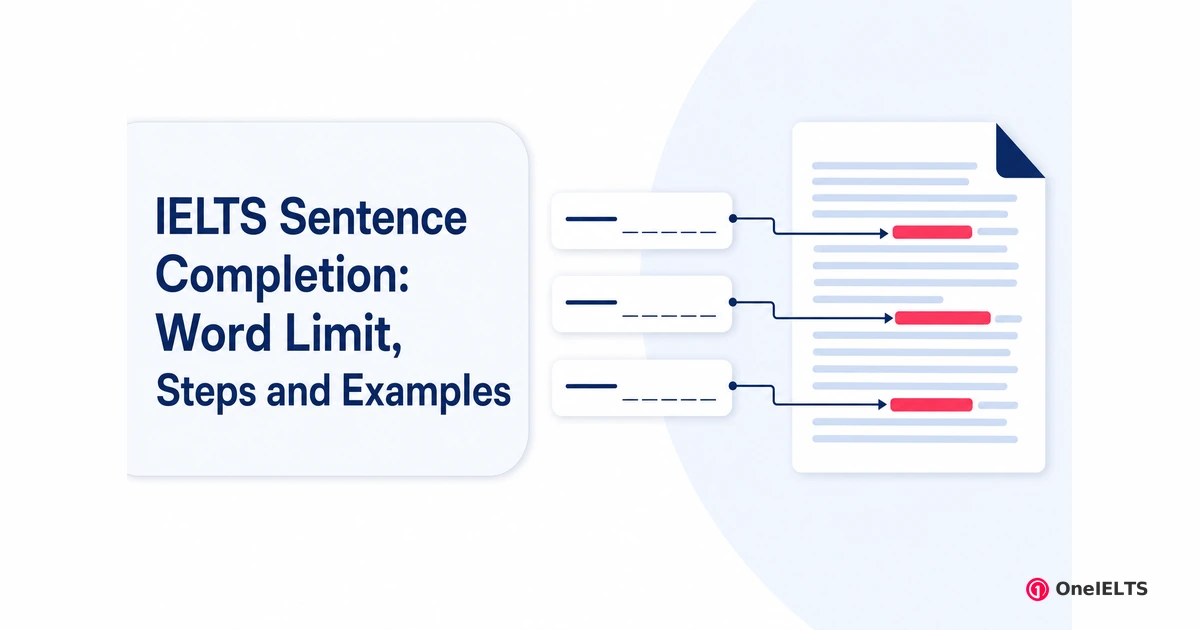
IELTS Reading sentence completion hands you half-finished sentences and asks you to complete each gap with words from the passage, inside a stated word limit. The sentence grammar around a gap fixes the answer’s shape before you read a line of the text. A word that is factually right but grammatically impossible still scores zero. […]

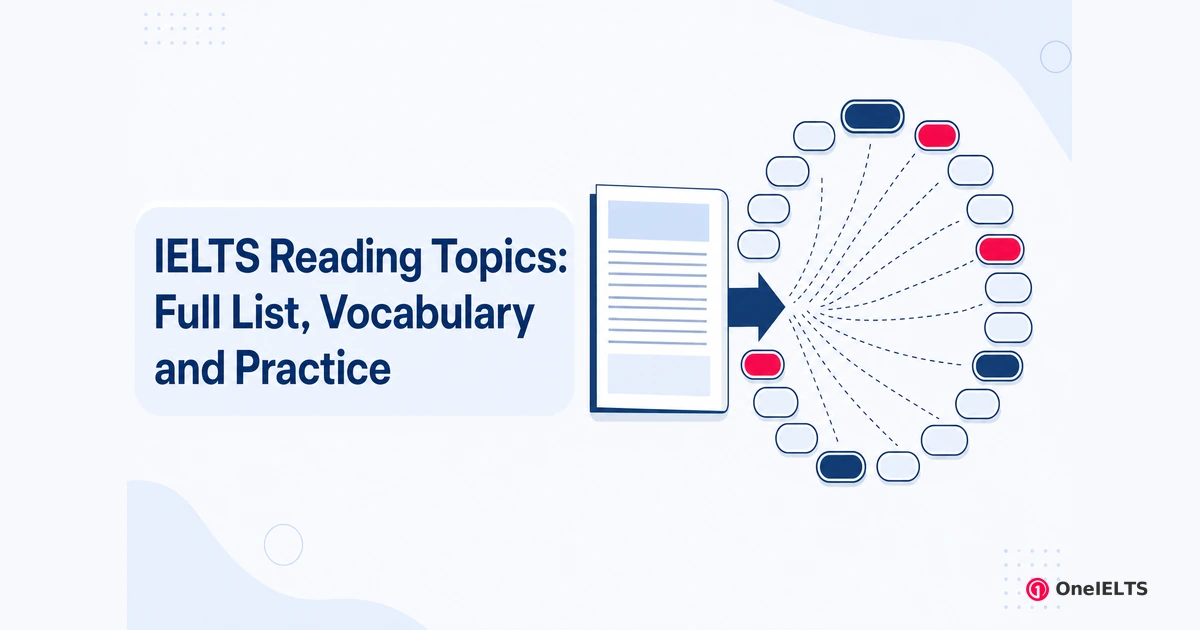
No IELTS Reading topic is off-limits, and none of them needs prior knowledge, because every answer sits somewhere in the passage in front of you. IELTS Reading topics are not a syllabus you can revise like a school subject. Every list you find, including this one, is an inventory of past passage titles. This guide […]

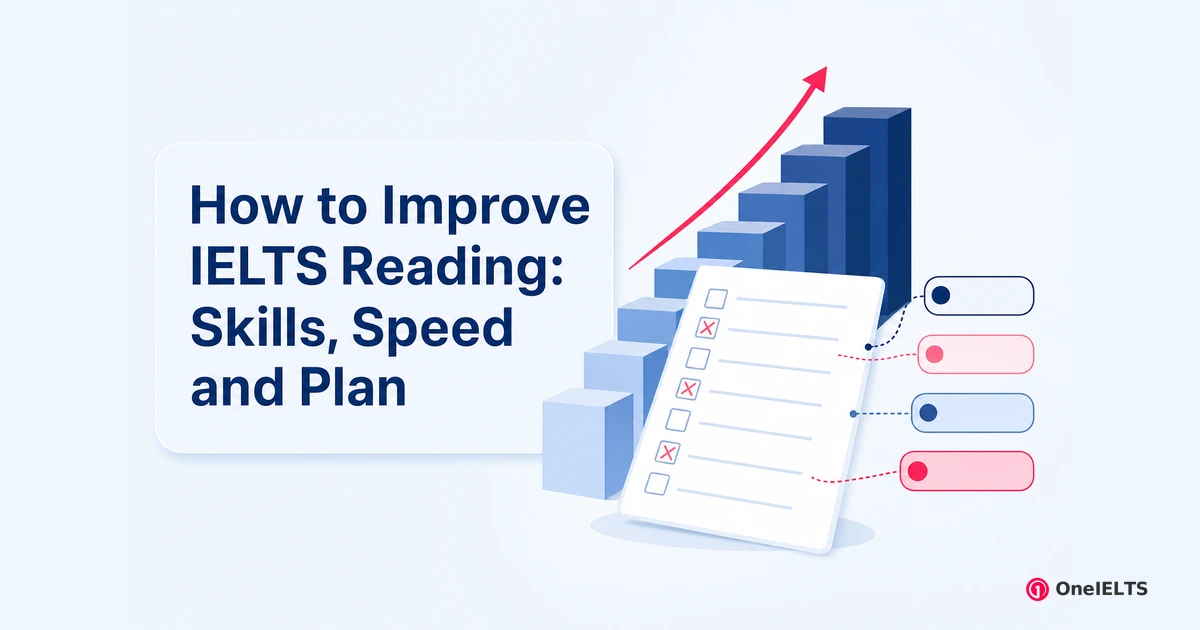
What you do next depends on your current band and on the question types that lose you marks. So this page starts with a diagnosis. Improvement means a measurable change in marks out of forty, not a feeling of reading better. Your IELTS Reading score moves when skill building is aimed at your own error […]