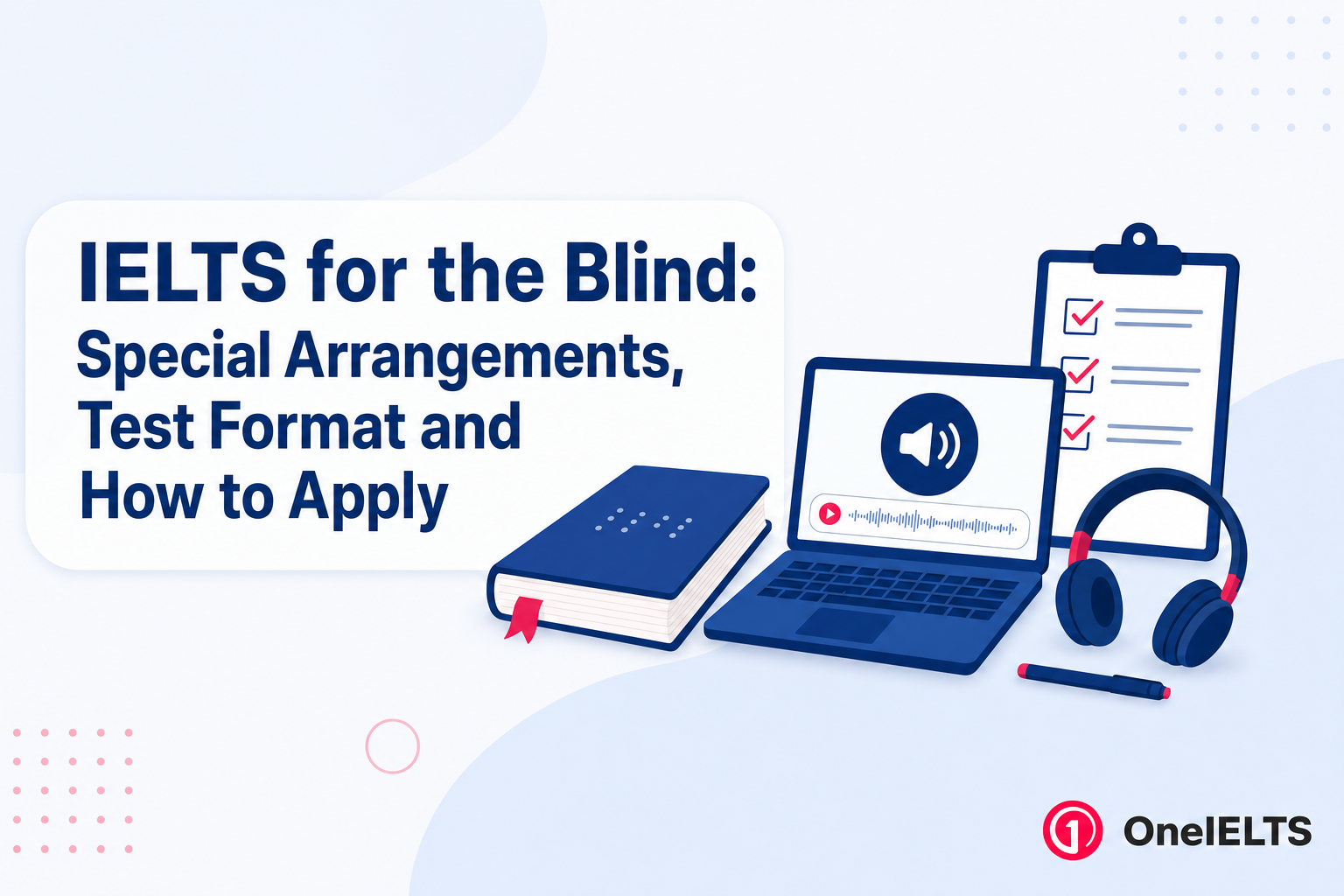
Blind and low-vision candidates take the same IELTS as everyone else, and the test adapts to the reader rather than the other way around. IELTS for the blind keeps the standard nine-band scale and simply changes the delivery — braille papers, enlarged print, screen reader output and modified materials. A result therefore means exactly what it always means.
This guide explains the special arrangements IELTS offers, how the test format works for blind candidates, and how to apply. It then covers the medical evidence you submit, the request deadlines, and whether the scoring and One Skill Retake stay the same. Because braille and modified papers take time to produce, accessibility needs are requested well in advance.
Last verified: 30 June 2026
What Special Arrangements Does IELTS Offer Blind Test-Takers?
IELTS offers braille, enlarged print, screen reader and modified materials with extra time for blind and low-vision candidates. The British Council and IDP prepare these versions on request so the question content matches the standard paper exactly. The supported arrangements for blind and low-vision candidates are set out here.
- Braille papers. IELTS produces question papers in contracted or uncontracted braille for candidates who read by touch.
- Enlarged print. Test centres supply enlarged print versions, commonly in 18-point or larger font, for low-vision readers.
- Screen reader access. The computer-delivered test works with a screen reader so candidates hear the on-screen questions read aloud.
- Modified materials. IELTS adapts diagrams, maps and charts into described or tactile modified materials that a non-visual reader can use.
- Extra time. Centres add extra time to each section, since reading braille or listening to a screen reader takes longer than print.
How Does the IELTS Test Format Work for Blind Candidates?
The four sections keep their standard tasks, and only the access method changes. Listening uses the same recordings, with answers typed, brailled or dictated to a scribe. Reading delivers the same passages in braille, enlarged print or through assistive technology such as a screen reader or refreshable braille display. Writing accepts braille, a keyboard or a scribe who records exactly what you dictate.
Speaking runs as a normal face-to-face interview with an examiner, since it needs no visual material. Each section adds extra time so the adapted format never rushes a non-visual reader. The same content and the same band scale apply throughout, which keeps the result comparable to any other candidate’s.
How Do You Apply for IELTS With Special Arrangements?
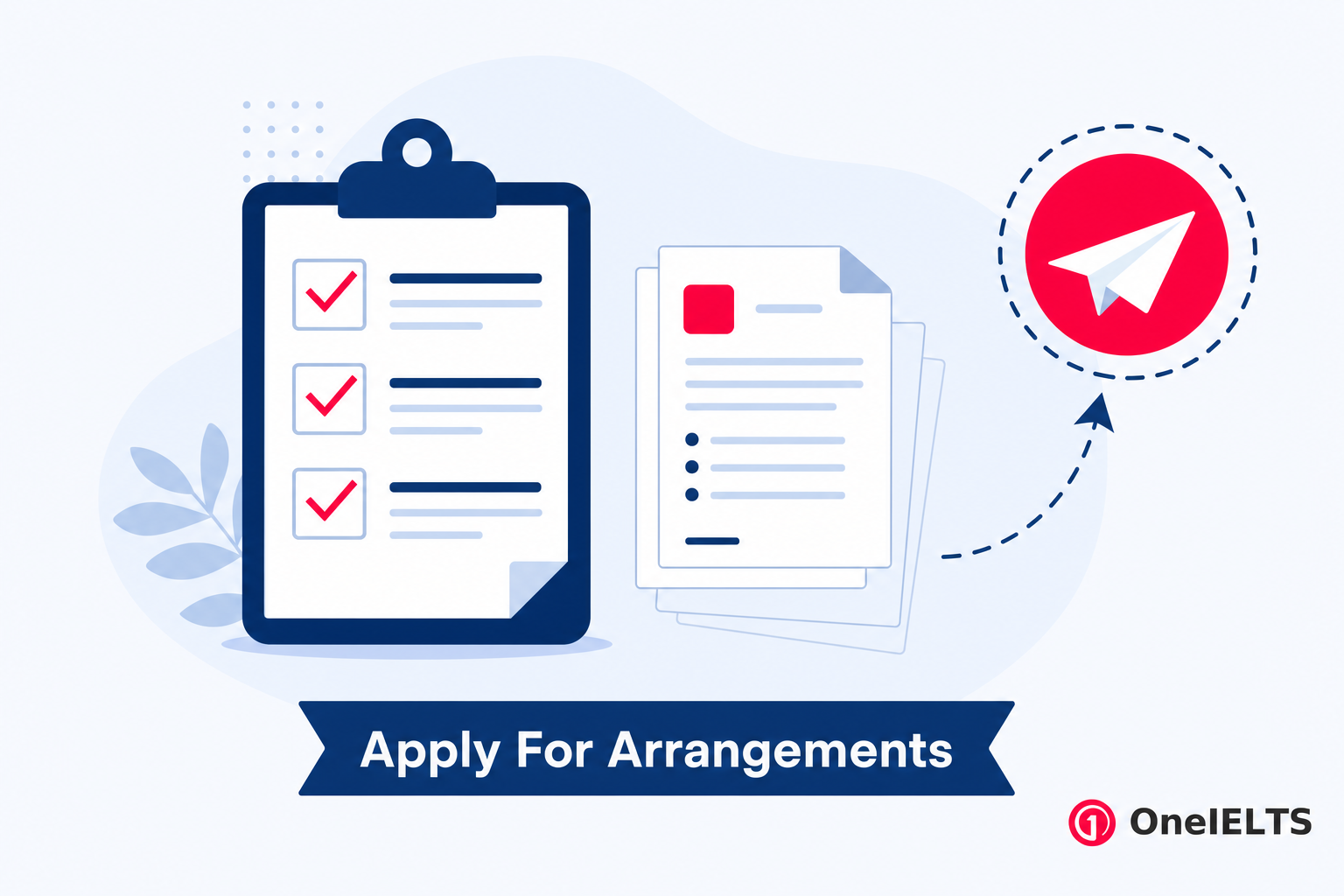
Arranging a modified test runs alongside your normal booking, but it starts earlier and needs paperwork. The steps to request special arrangements are listed in order below.
- Contact your test centre at least 3 months ahead. The centre needs 3 months notice so it can reserve the lead time braille and large print require.
- Submit medical evidence of your vision condition. Send a current report that documents your vision condition and the specific arrangements it supports.
- Agree the arrangements with the centre. The centre confirms which adaptations and how much extra time it can provide for your sitting.
- Book your modified test. Once approved, you book the modified test date and pay the standard fee with no surcharge.
What Medical Evidence Do You Need to Submit?
IELTS requires medical evidence before it approves modified materials for blind and low-vision candidates. The report names your vision condition and the arrangements it supports, which lets the centre prepare braille, large print or screen reader access correctly. A vague note will not clear the approval.
The report must be an English-language report, or an official translation, so the centre can read it directly. A registered medical professional such as an ophthalmologist or optometrist must write and sign it. Each centre also expects the report to be issued within two years of your test date, so an older assessment usually needs refreshing first.
What Are the Request Deadlines for IELTS Special Arrangements?
Modified materials such as braille and large print need at least 3 months in advance, while administrative arrangements like extra time or a reader need at least 6 weeks in advance. The two windows differ because they involve different work. Producing modified test versions means transcribing a live paper into braille, enlarging and reformatting graphics, and quality-checking every question. That production cannot be rushed. Administrative arrangements reuse the standard paper and only change how the sitting is run, so a shorter notice covers them.
Does IELTS for Blind Candidates Use the Same Scoring?
IELTS for blind candidates uses the same band scale and the same requirements as the standard test — only the delivery is adapted. A blind candidate and a sighted candidate who give equally strong answers earn the identical band, because the marking criteria never change with the format. The adapted delivery covers how questions reach you and how you respond, not how examiners score you.
That equal recognition matters once the result leaves the test centre. Universities read a modified-test band exactly as they read any other, and immigration authorities treat it the same against their thresholds. The identical requirements mean you prepare for the same target score every applicant aims at.
Is the One Skill Retake Available for Blind Candidates?
Yes, the One Skill Retake is available where the modified test is computer-delivered, so you can re-sit one section instead of the whole exam. It lets you retake a single section — Listening, Reading, Writing or Speaking — when one band lets down an otherwise strong result. The feature depends on the computer-delivered platform and your screen reader setup, so confirm availability with your test centre before you rely on it. You can read how the One Skill Retake works and when it suits a single weak section.
Can Blind Candidates Choose Paper or Computer IELTS?
Yes, blind candidates can usually choose the format that best fits their assistive setup, and the test centre confirms what it can run. The choice between paper or computer comes down to how you read and respond most comfortably. Screen reader users generally favour the computer-delivered test, since it speaks the questions and pairs cleanly with a refreshable braille display. Braille readers who prefer touch may still opt for adapted paper materials. Our guide to computer-delivered IELTS explains how that format supports accessibility tools.
Practice for the Real IELTS Exam
Apply what you’ve learned with free, exam-style practice:
- Take a full IELTS mock test
- Practice by section: Listening, Reading, Writing, Speaking
- Structure your essays with IELTS Writing templates