Most IELTS exam anxiety comes from the unknown, so the fix is to make the test feel familiar long before you sit it. The nine strategies here follow your nerves: four before the exam, two on exam day, and three for Speaking, then a calm routine. They start with getting familiar with the test format and running timed mock tests.
Next come visualizing success and box breathing, before posture and hydration steady you on the day. The Speaking strategies and the day-of routine close it out, because rehearsing the real format beats generic “stay calm” advice. The single strongest move is to focus on control of your preparation, not the score.
1. Get Familiar With the Test Format
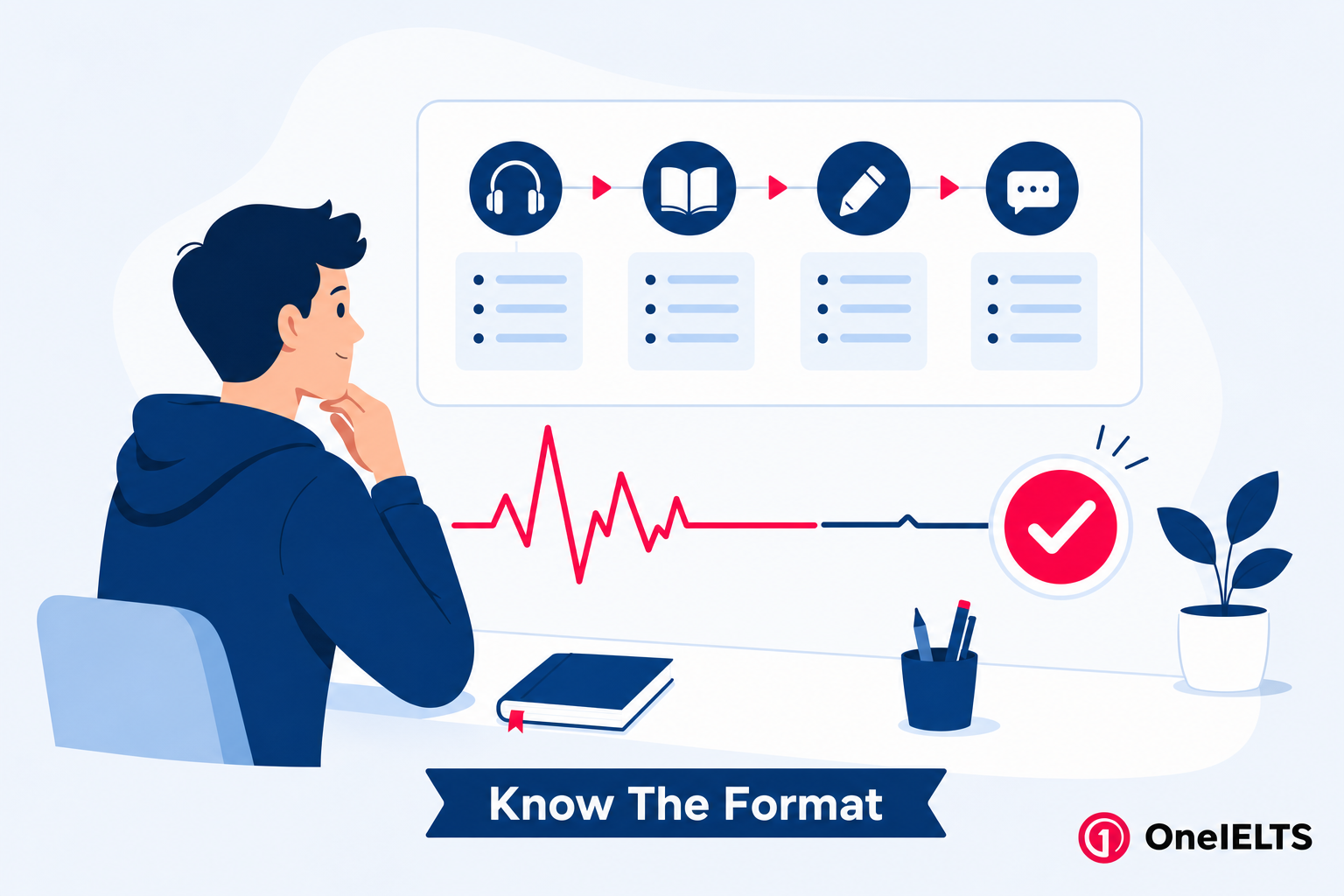
Anxiety thrives on surprises, so get familiar with the test format before exam day. Knowing the four sections, the strict timing, and that there are no breaks between Listening, Reading, and Writing removes the fear of the unknown. Sit a full familiarisation test once so nothing on the day is new.
2. Do Timed Mock Tests
Run timed mock tests under real exam conditions until the clock stops feeling like a threat. Repeating the full sequence at exam pace builds the familiarity that makes test day feel routine rather than frightening. Pull your papers from official materials by IDP or the British Council so the questions match what you’ll actually face.
3. Visualize Success Before the Exam
Spend a few minutes each day on mental rehearsal: visualize success by picturing yourself walking into the test centre calm, sitting down, and starting steadily. This habit primes confidence so the real walk-in feels rehearsed. Accept that some nervousness is normal energy, and stay calm by working with it rather than fighting it.
4. Use Box Breathing to Reset Your Nerves
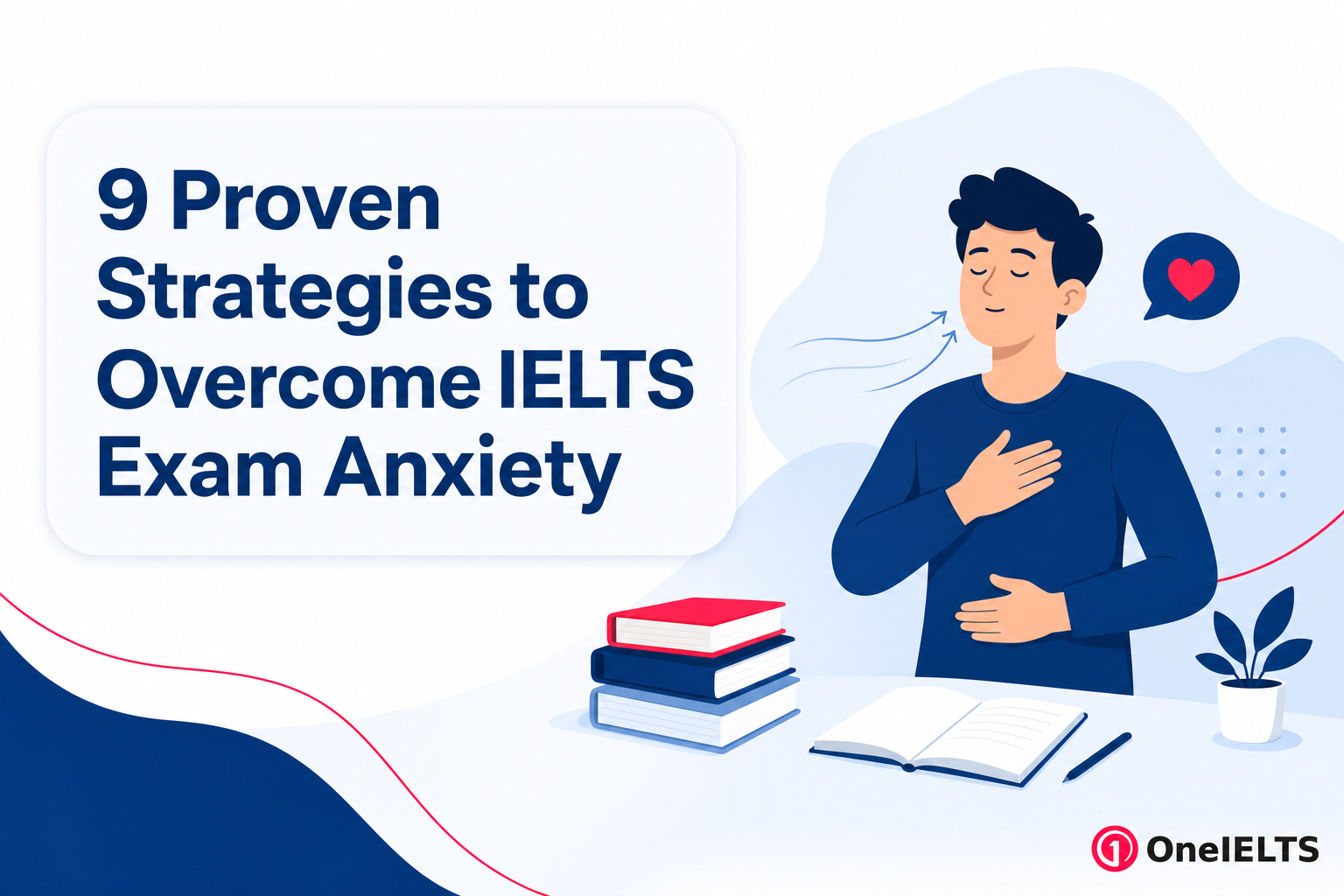
Box breathing helps you reset nervous system signals fast: inhale for 4 seconds, hold for 4, exhale for 4, then hold for 4, repeated three to four times. The even rhythm slows your heart rate within a minute. Reach for it when overwhelmed, whether in the waiting room or mid-section.
5. Adjust Your Posture for Confidence
Adjust posture so you sit upright with relaxed shoulders and open body language, because posture feeds back into how you feel. An open, grounded position psychologically signals confidence to your own brain and keeps your airway open so you speak clearly. Slumping does the opposite, tightening your breathing just when you need it steady.
6. Hydrate and Snack on Exam Day
Hydrate and snack on exam day to keep your body on your side. Water prevents the dry mouth that makes Speaking harder, and a high-protein snack delivers steady energy through a long morning. Don’t over-caffeinate, though; a third coffee spikes your heart rate and worsens the jittery nerves you’re trying to calm.
7. Treat the Speaking Test Like a Dialogue
Treat the Speaking test like a dialogue, not an interrogation, and the room shrinks in your mind. To treat like a dialogue, remember the examiner is a person having a conversation with you, not a robot scoring every syllable, so you speak to communicate your ideas. In practice this reframing lowers Speaking nerves more than any other single tip candidates try.
8. Use Strategic Pauses When You Speak
Strategic pauses are allowed, so a short beat to gather thoughts is completely fine. Use natural fillers like “you know” or “I suppose” to hold the floor while you organise what comes next. A brief pause reads as thoughtful; rushing into an unclear, half-formed answer is what actually costs you marks, so don’t rush.
9. Ask for Clarification if Unsure
If you don’t understand a Speaking question, ask for clarification: it’s perfectly fine to ask the examiner to repeat or rephrase it. The examiner won’t penalise you for it, because checking the question is normal in any conversation. It also helps you avoid off-topic answers, since a panicked guess drifts away from what was actually asked.
How Do You Overcome IELTS Anxiety on Exam Day?
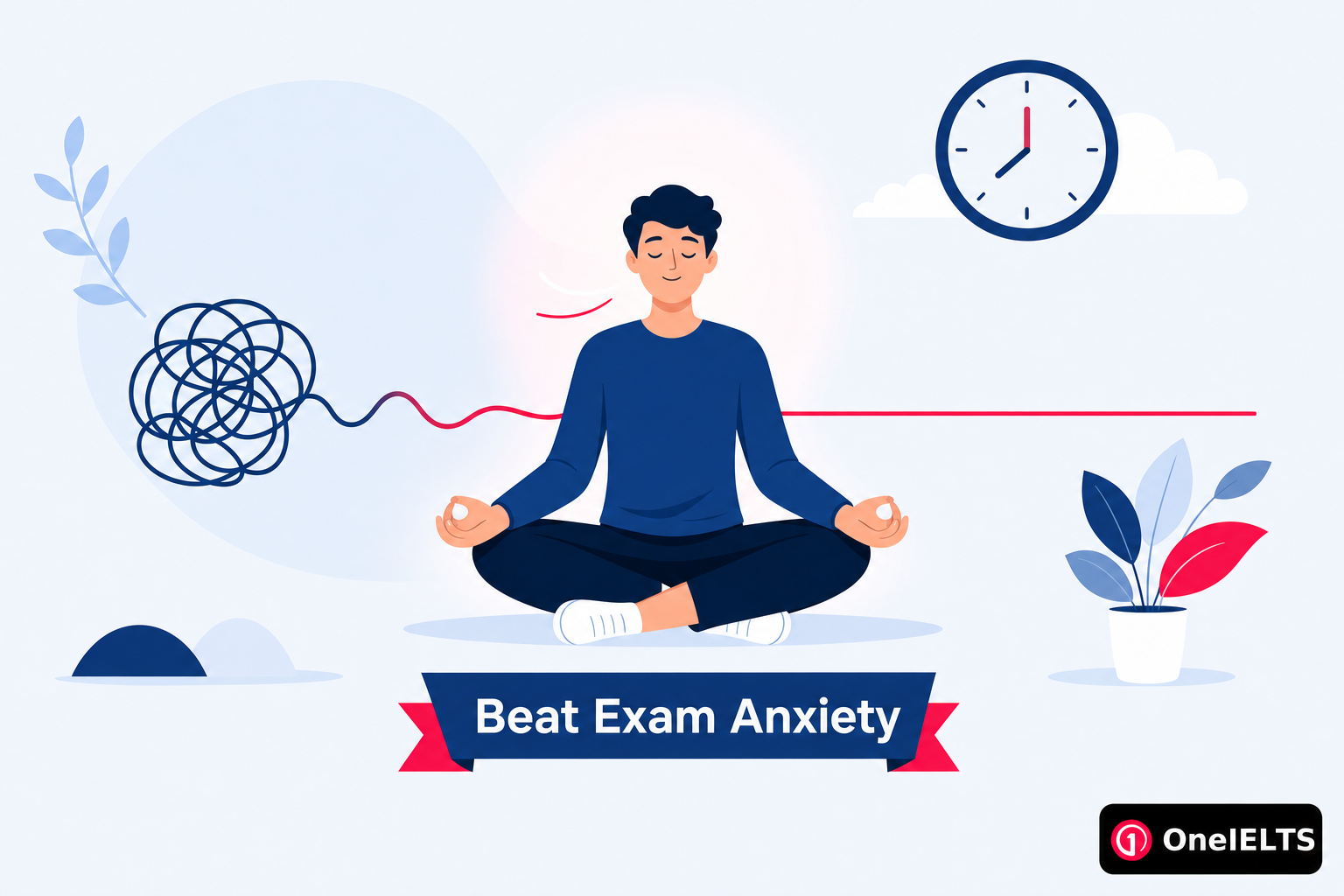
You overcome anxiety on exam day by turning your best strategies into one simple routine you run on autopilot, so nerves never get a foothold. Each habit below stacks on the last, carrying you from the front door to the Speaking room. The five day-of habits in this exam day routine are listed here, each tied to a moment in your morning.
- Arrive early. Reach the test centre with time to spare so a rushed, stressful start never sets the tone for your whole exam.
- Box-breathe before you start. Run two or three rounds of box breathing in your seat to slow your heart rate before the first section begins.
- Adjust your posture. Sit upright with relaxed shoulders so your body signals calm confidence and your breathing stays open and steady.
- Treat Speaking as a chat. Walk into the Speaking test expecting a normal conversation, which keeps your tone natural and your answers flowing.
- Pause and ask if unsure. Take a short pause to think, and ask the examiner to rephrase any question you don’t fully understand.
How Do You Stay Calm on IELTS Exam Day?
Stay calm on exam day by arriving early, using box breathing before you begin, and focusing on control rather than a perfect score. Focus on control of what you can, your arrival time and your breathing, and you leave no room for spiralling over things you can’t. What really makes the day feel manageable is the thorough timed practice you did beforehand. A format your body already knows can’t surprise you, so build that groundwork with our IELTS preparation tips.
Last verified: 30 June 2026
Practice for the Real IELTS Exam
Apply what you’ve learned with free, exam-style practice:
- Take a full IELTS mock test
- Practice by section: Listening, Reading, Writing, Speaking
- Structure your essays with IELTS Writing templates