An examiner never counts your words. What gets marked is whether each word fits the thing you are describing, and that judgement carries the name Lexical Resource. IELTS Speaking vocabulary runs on two axes, not one. There is topic lexis for the themes that keep coming back, and there is the functional phrase set that […]

A band-9 cohort at IELTS Advantage averaged 1.2 idioms across the whole test, and many of those students used none at all. What the examiner hears is a fixed phrase whose meaning is not the sum of its words, and it either lands naturally or announces itself as a memorised phrase. Lexical Resource rewards idiomatic […]

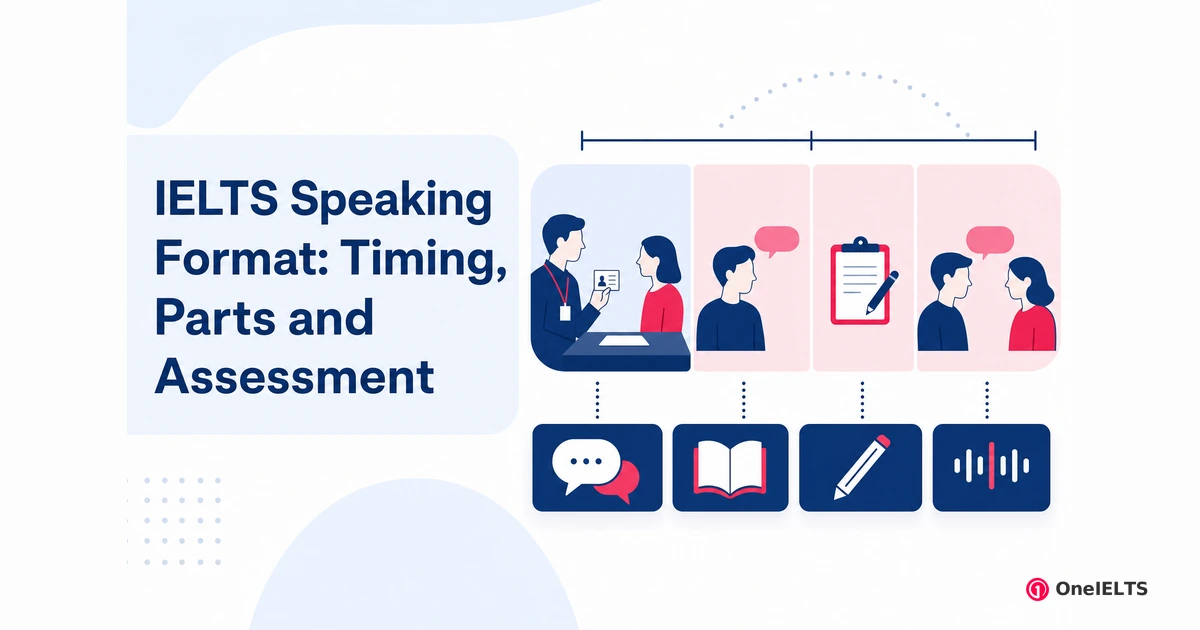
Eleven to fourteen minutes, three parts, one examiner. You arrive, your photo ID goes through an ID check, and then you talk: Part 1, a Part 2 card with one minute of preparation, then Part 3, all of it recorded. Four marking criteria produce the band, not five, and the IELTS Speaking test format sets […]

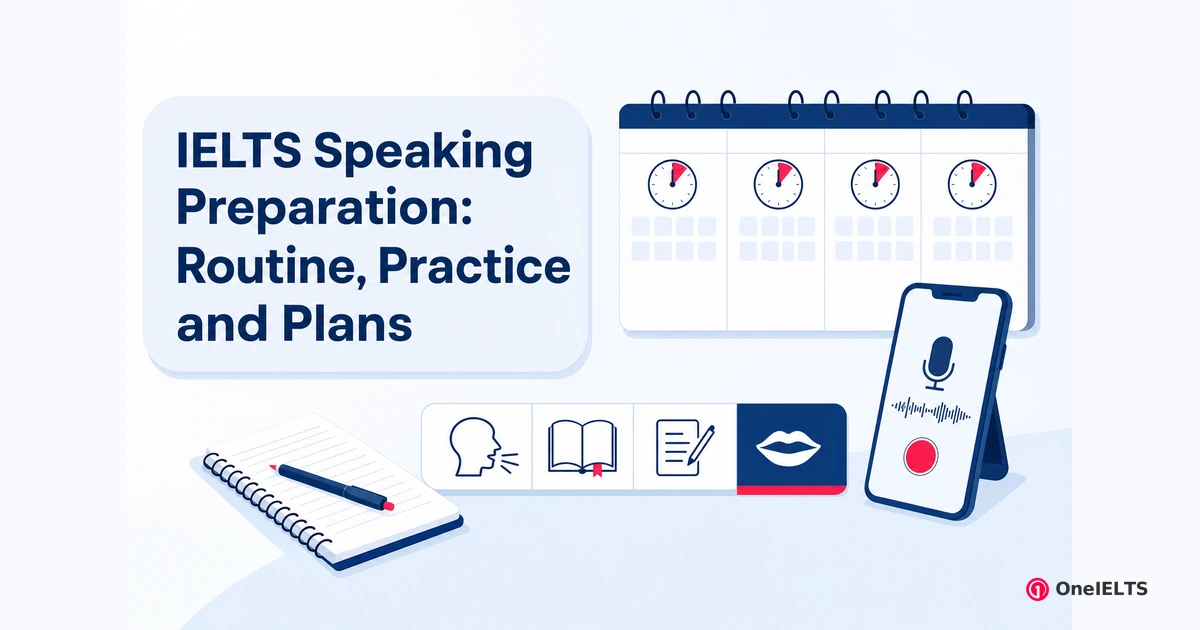
Four to eight weeks of short daily practice moves IELTS Speaking by one band, and seven days only stops you losing marks you already had. A preparation routine that works is small and repetitive: a fifteen-minute daily session, recorded practice you listen back to, and one fix per session aimed at a single criterion. This […]

Yes, you can invent an answer in IELTS Speaking, and it costs you nothing. You are marked on language, and the examiner never checks your facts. One moment is different. At the ID check you must not, and that single limit is missing from the answer Google puts at the top of this search. This […]

You sit in a room with one examiner for eleven to fourteen minutes, and every word is recorded and marked against four marking criteria. The IELTS Speaking tips that matter in that room are test-day tactics, not study plans. This page runs in the order the day does. It covers delivery, answer length, and what […]

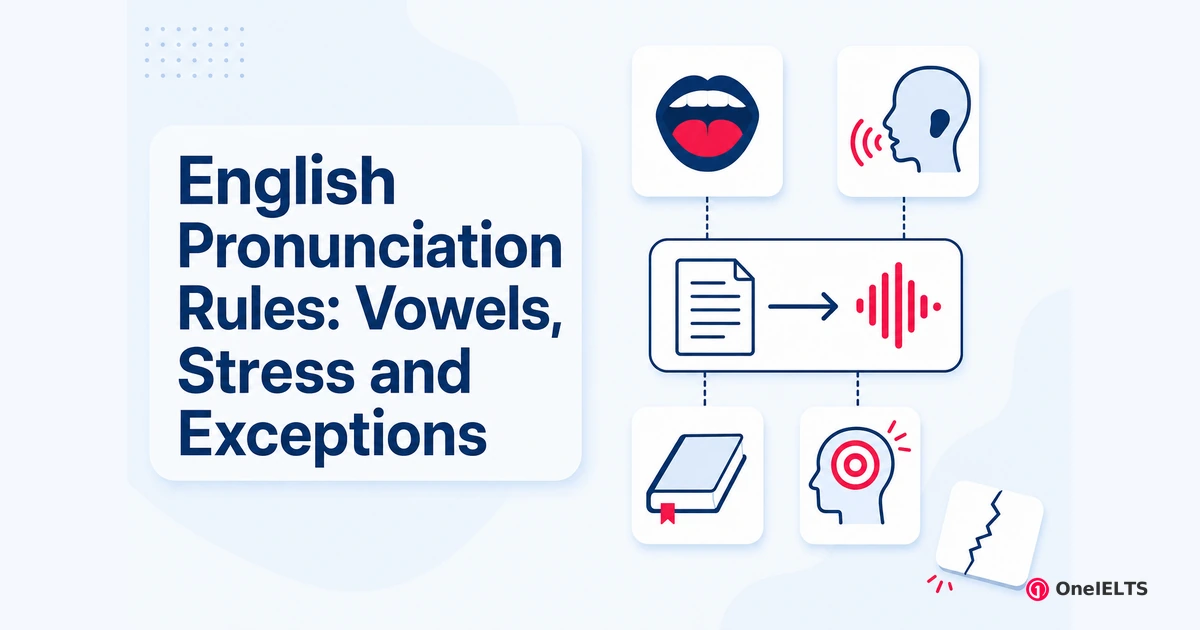
English pronunciation rules are the repeating spelling-to-sound patterns that link how a word is written to how it is said. They are patterns with exceptions rather than laws. No fixed number of them exists. One ranking guide gives 25, another gives 35, and only one answers the count honestly: ‘There are way more than five […]

You build spoken fluency by talking out loud every day, recording two minutes of it, and listening back for long pauses rather than for grammar mistakes. That routine needs nobody else in the room. On timeframe, a few months of daily speaking usually moves a learner one level, while thirty days is enough to stop […]

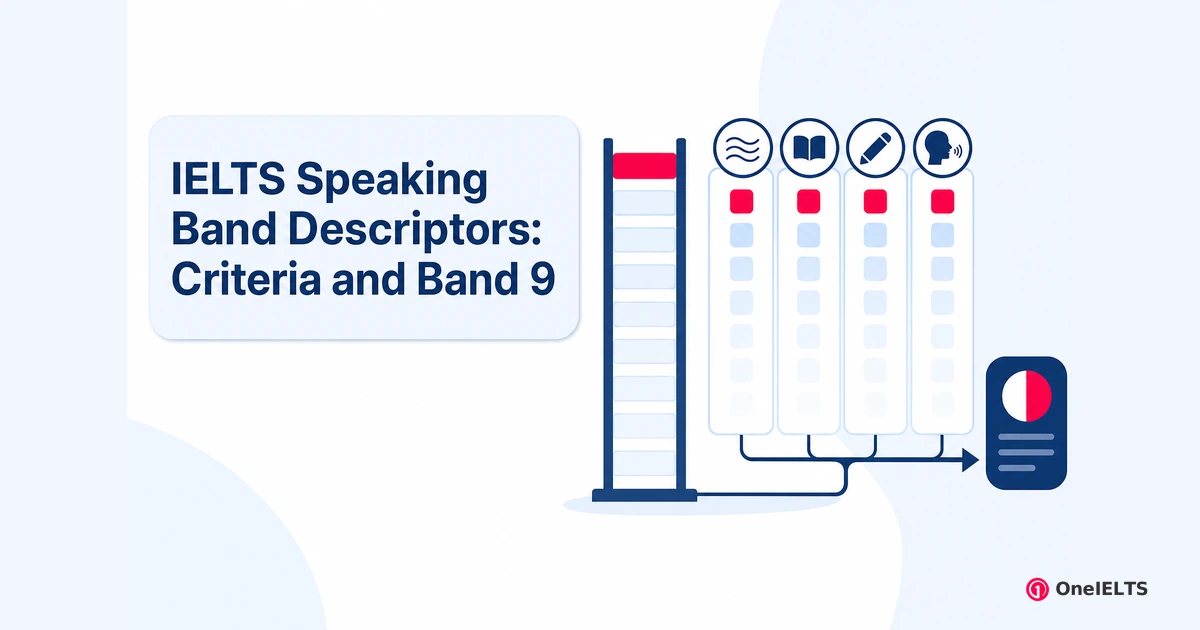
Four criteria, nine bands, one published document. The IELTS Speaking band descriptors are the statements an examiner matches your speech against to award a band from 0 to 9 on each of four assessment criteria. That band descriptor wording is released as a public version PDF, so you can read the same text the examiner […]

In IELTS Listening, a multiple choice question gives you a spoken passage and a set of printed options, and you mark the one the speaker actually confirms. Almost every option you see also gets named in the audio, so the work is hearing confirm versus reject rather than spotting a familiar word. This guide explains […]

Table completion gives you a grid of rows and columns to fill, and the headers tell you the category of every gap before the audio starts. You read each gap as a known type — a price, a date, a place — then catch that value as the speaker moves through the table. This guide […]

Form completion gives you a part-filled form and asks you to write the missing words and numbers as you hear them, almost always in Section 1 of the IELTS Listening test. The audio is an everyday transaction, so the gaps hold predictable personal details such as spelled names, phone numbers, addresses and dates. This guide […]