IELTS Listening sentence completion asks you to fill the gap in a printed sentence with the exact word from audio, kept inside a stated word limit. The trick is that the missing word must fit the sentence grammatically, so the question is half listening and half grammar. Read the stem first and predict whether the gap wants a noun, a number, or a plural. That prediction narrows what you are listening for before the recording starts.
This guide explains what these questions are, how to complete them step by step, the word-limit rules that govern them, and why over-writing costs marks. It also shows what a real question looks like, how to avoid the common mistakes, and how to practise the type with real audio.
What Are IELTS Listening Sentence Completion Questions?
IELTS Listening sentence completion questions give you printed sentences with gaps that you finish using the exact word from audio you hear in the recording, always within a stated word limit. Each gap is a single blank you fill the gap for, and you copy the speaker’s words rather than paraphrase. The type appears across all four sections of the Listening test, most often in Sections 1 and 4, where the recording runs once and the answers come in the order the audio presents them.
How Do You Complete Sentence Completion Questions?
To complete sentence completion questions you work the stem before the audio, then listen for the signposted answer and write it cleanly. Reading first tells you what kind of word the gap needs, so you spend the recording confirming a prediction instead of decoding from scratch. The five steps that turn the stem into a correct answer are set out in order below.
- Read each sentence and predict word form, deciding whether a noun, verb, adjective, or number fits the gap, so you listen for that one shape rather than every word spoken.
- Underline keyword terms in the stem, usually the noun or name beside the gap, because the speaker signals the answer right after a synonym of that word.
- Listen for the paraphrase, since the recording rarely repeats the stem’s wording and instead cues the answer through a reworded version of the same idea.
- Write the exact word you hear, copying the speaker’s term without changing it, because invented or “improved” words score zero even when the meaning is right.
- Check the answer’s grammatical fit, reading the completed sentence back to confirm the tense, number, and part of speech match before you move on.
What Word-Limit Rules Apply to Sentence Completion?
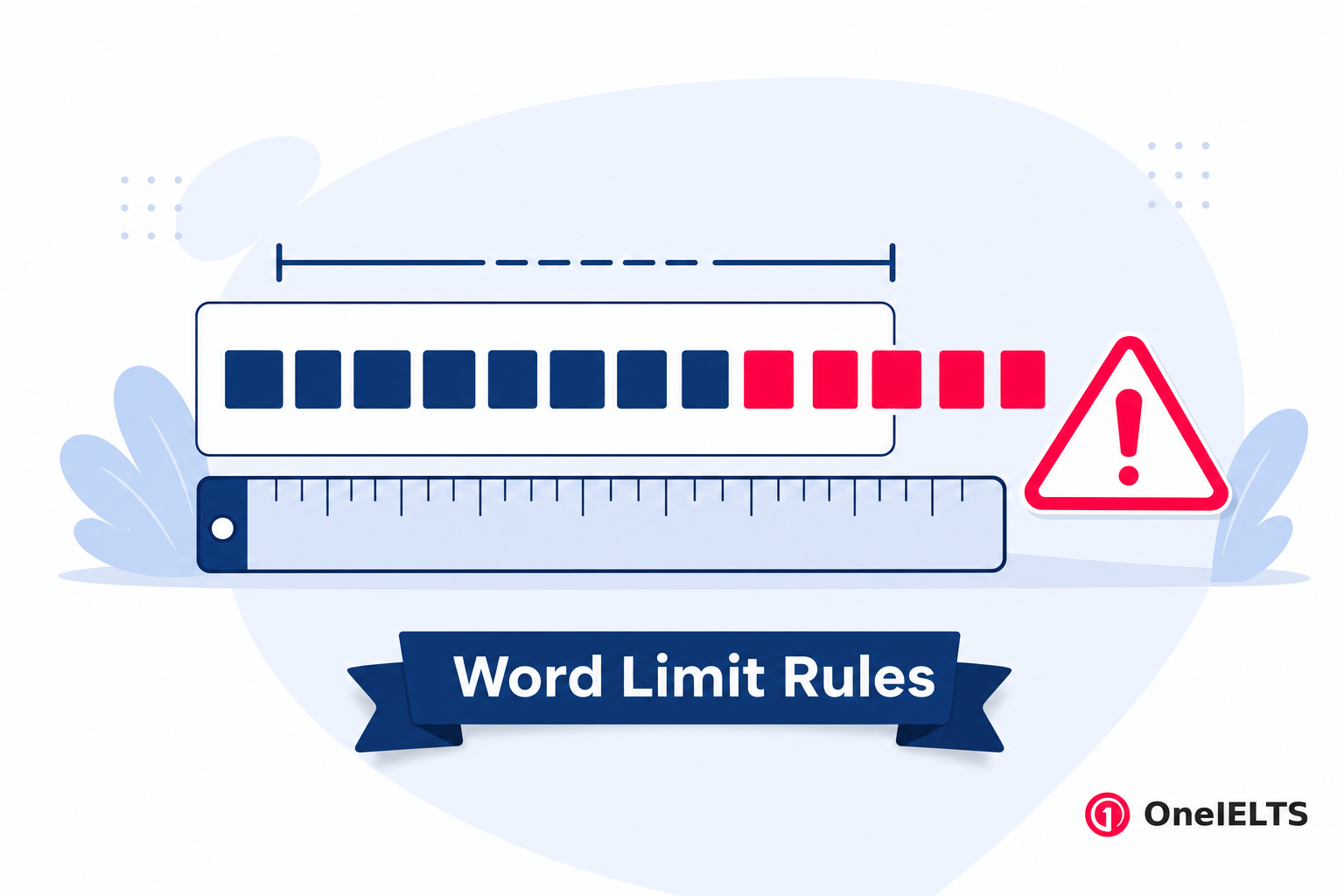
Every sentence completion task carries an instruction such as “NO MORE THAN TWO WORDS AND/OR A NUMBER”, and that line sets a hard ceiling on each gap. The phrase “and/or a number” means a figure can stand alone or sit beside the allowed words, and exceeding the count voids an otherwise correct answer. The rules that decide whether your entry is accepted are listed here.
- The no more than X words ceiling is absolute, so a three-word answer in a two-word gap fails even when every word is correct.
- A number counts toward the limit only as its own unit, so “15 December” uses one word and one number and stays inside a two-word instruction.
- A hyphenated word such as “part-time” counts as a single word, which lets you fit compound terms without breaking the ceiling.
- Over-writing fails because adding an article or extra noun the speaker did not stress pushes you past the limit and loses the mark.
Why Do Word Limits Cost Marks in Sentence Completion?
Writing more than the allowed number of words makes a correct answer wrong, because the marker applies the word ceiling before judging meaning. If you exceed word limit rules, the marker scores the gap zero even when the meaning is right. A candidate who hears “annual report” and writes “the annual report” is correct but over length on a two-word gap, so that extra article gets the answer marked wrong.
What Does a Sentence Completion Question Look Like?
A typical sentence completion item prints a gap in a sentence above a word or number limit, like this: Write NO MORE THAN TWO WORDS AND/OR A NUMBER. The library closes at ______ on weekdays. You write the exact words heard, here a time such as “8 pm”, in a form that respects the grammatical fit of the surrounding sentence. The instruction line dictates that answer: it caps the words and forces you to copy whatever the speaker actually says, never reworded to sound neater.
How Can You Avoid Mistakes in Sentence Completion?
You avoid most sentence completion errors by treating the gap as a grammar slot and the audio as a dictation, not a comprehension puzzle to summarise. The candidates who score full marks respect the count, match the form, and copy the speaker verbatim; in practice, more answers are lost to over-writing and misspelling than to genuinely mishearing the word. The tactics that protect your marks are set out below.
- Respect the word limit on every gap, counting your words before you move on, because a single extra word turns a correct answer into a zero.
- Match the grammar by checking singular plural agreement and tense, since “ticket” where the sentence needs “tickets” fails even though you heard the right root word.
- Do not change the exact words you hear, because swapping in a synonym you prefer scores nothing when the marker expects the speaker’s own term.
- Watch your spelling, as a misspelt answer is marked wrong, so write British or American forms consistently and read the word back letter by letter.
- Never leave a blank, because an unanswered gap guarantees zero, while a sensible guess based on the predicted word form can still earn the mark.
How Can You Practise These Questions With Real Audio?
Drill this question type with timed practice tests and replay misses until you hear the cue you skipped. Isolate the type before you sit full mock papers, working a set of gap items on their own so you train the read-predict-listen habit, then fold sentence completion back into a complete section. Build the habit on our IELTS Listening practice test and replay each missed answer to find the paraphrase you didn’t catch.
Last verified: 30 June 2026
Practice IELTS Listening
Put this into practice with real, exam-style questions: