In IELTS Listening diagram labelling you label parts of an object or process stages on a picture, writing the exact word from audio into each numbered gap. Most answers are concrete nouns, and the speaker moves through the diagram in order, so following that order is the whole skill.
This guide explains what these questions are and how to answer them step by step. It also covers the vocabulary that helps, how diagram labelling differs from map labelling, what a real question looks like, the strategies that lift your score, and how to practise with real audio. Last verified: 30 June 2026.
What Are IELTS Listening Diagram Labelling Questions?
Diagram labelling asks you to label parts of an object, machine or process using words from the audio, writing each answer onto a numbered picture within the stated word limit. The answers cover object parts or process stages, and each label is the exact word from audio rather than an invented number or opinion. This question type appears in the IELTS Listening test, most often in Section 2 or Section 3, where one speaker explains how a device works or how a process runs.
How Do You Answer Diagram Labelling Questions?
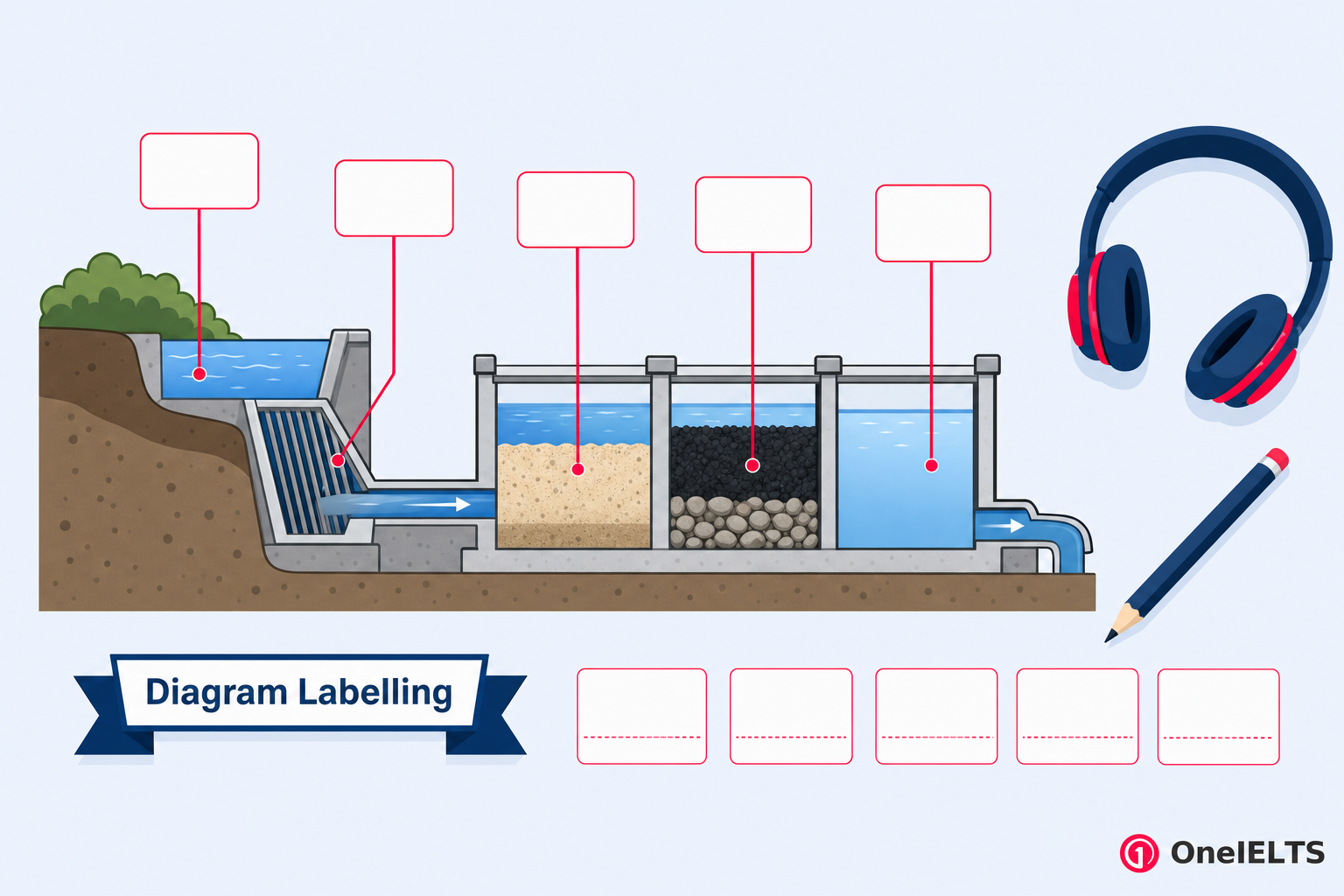
The approach is simple but disciplined: read the picture first, decide what kind of word each gap needs, then track the speaker through the diagram and write exactly what you hear. The four steps that work for diagram labelling are set out below.
- Study the diagram and its existing labels. Look at the picture before the audio starts, read every printed label, and work out what the object or process is so the gaps make sense.
- Predict the type of word for each gap. Decide whether each answer is likely a part, a material or a process verb, so you predict word type and recognise the right word the moment the speaker says it.
- Follow the speaker’s order around the diagram. Speakers describe parts in sequence, so follow the order they take through the picture; if you lose one gap, jump to the next part rather than freezing.
- Write the exact word within the limit. Write the word from the audio exactly, spelled correctly, and respect the word limit such as “one word only” so an over-long answer is not marked wrong.
What Vocabulary Helps With Diagram Labelling?
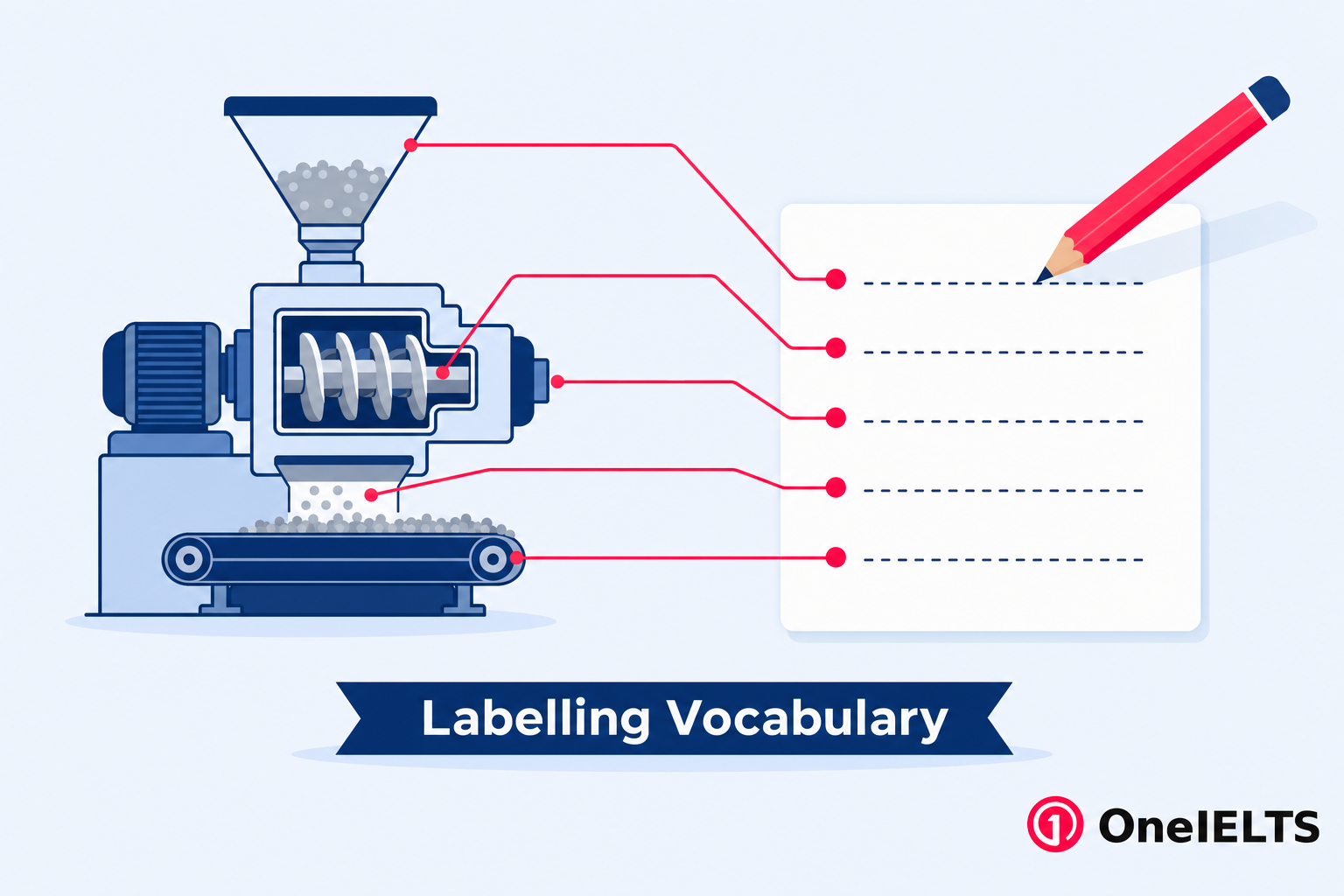
Diagram labelling answers fall into a few predictable word categories, and knowing them sharpens your prediction at each gap. The categories that come up most across machines, devices and natural processes are listed here.
- Parts and components. Names of the pieces that make up an object, such as valve, filter, blade, chamber or handle, which are the parts and components you label directly.
- Materials. Words for what something is made of, such as rubber, copper, plastic or glass, where materials tell you which substance fills the gap.
- Shapes. Descriptive words for form, such as cylindrical, curved, triangular or hollow, where shapes describe a part rather than name it.
- Process verbs. Action words for stages of a process, such as heated, filtered, released or compressed, where process verbs mark what happens at each step.
How Is Diagram Labelling Different From Map Labelling?
Diagram labelling names parts of an object or process, while map labelling places locations on a layout. A diagram asks for the technical noun of an object part or one of the process stages. A map task instead makes you match a letter to a place, naming object parts versus locations.
What Does a Diagram Labelling Question Look Like?
A typical diagram labelling question shows a labelled diagram of a machine or process, perhaps a water filter or a recycling cycle, with several numbered parts left blank for you to complete. The speaker names each part in order using technical nouns as the explanation moves across the picture. You fill in order, writing each missing word into its gap the moment you hear it rather than waiting for the end.
What Strategies Help With Diagram Labelling?
The strongest tactic is to treat the picture as a map you read with your ears: anchor on what is already printed, listen for position and purpose, and keep your answers short. The strategies that reliably raise diagram labelling scores are listed here.
- Use the labelled parts as anchors. Use the labels already printed as labelled anchors, so a mention of a known part warns you the next gap is coming and keeps you locked to the right place.
- Listen for location and function words. Phrases of location and function, such as “at the top”, “underneath” or “this lets the air escape”, point straight to which part is being described.
- Expect concrete nouns. Most answers are concrete nouns naming a real component, so expect a thing you can touch rather than an abstract idea or a full phrase.
- Mind spelling of technical terms. Spelling counts, so write technical terms carefully; a misspelled word like “cylander” for cylinder is marked wrong even when you heard it correctly.
- Do not over-write. Respect the word limit and do not over-write; if the instruction says one word, a two-word answer scores zero however accurate the extra word is.
How Can You Practise These Questions With Real Audio?
Drill this question type with timed practice tests and replay every miss, treating each wrong label as a spelling or prediction lesson rather than a one-off slip. Candidates who do timed practice on the recording, then replay misses at the exact second they faltered, fix the same gap far faster than those who only sit full mocks. Isolate the type first by working through diagram tasks on their own before full Listening tests. Build the habit with a IELTS Listening practice test once the technique feels automatic.
How Do You Follow the Diagram in the Speaker’s Order?
Follow the diagram in the order the speaker describes it, usually top to bottom or input to output. Keeping to that order stops you mislabelling a part when two of them share a name. Let the sequence, not the picture’s layout, decide where you write.
What Common Diagram-Labelling Mistakes Lose Marks?
The frequent errors are labelling from your own logic instead of the speaker’s, and missing a part described out of visual order. Let the audio, not the picture, drive every answer. The speaker sometimes jumps across the diagram, so trust the words over the visual order you expect.
How Is Diagram Labelling Scored?
Each correctly placed label earns one mark, with no penalty for wrong answers, so attempt every blank. When you write a word rather than choose a letter, spell it exactly as the speaker says it.
Practice IELTS Listening
Put this into practice with real, exam-style questions: